
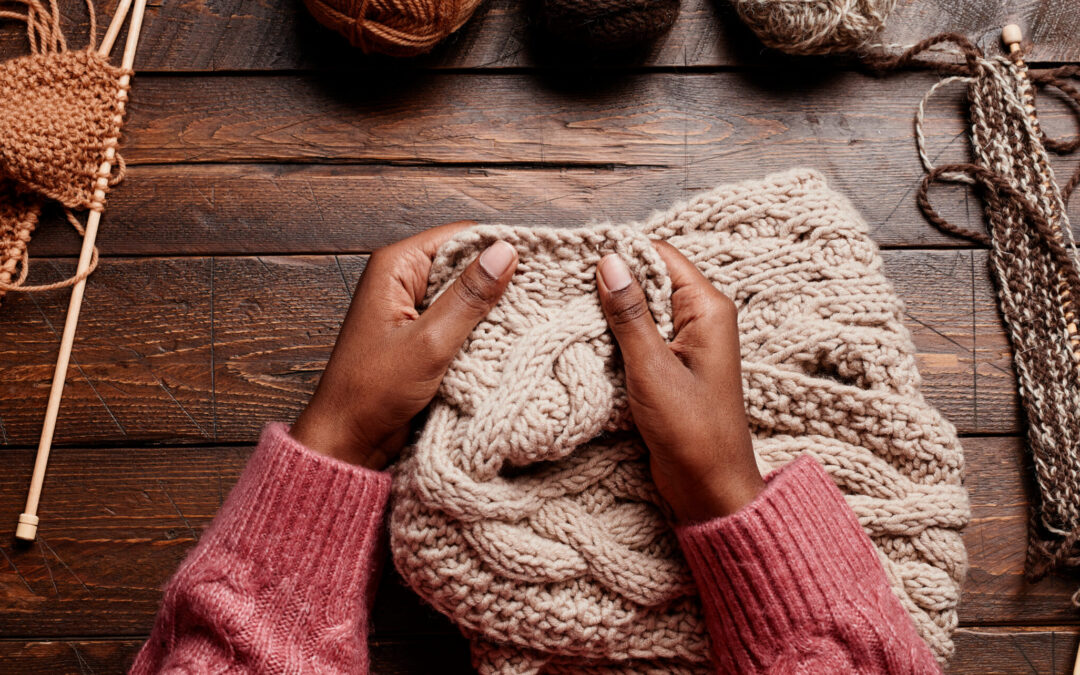
Your hands are idle. Your brain is firing. You’ve scrolled the same feed three times in the past hour, and somehow you’re more anxious than when you started. Welcome to 2026, where the quiet rebellion is happening with yarn needles and puzzle pieces.
Searches for analog hobbies on craft retailer Michael’s website have jumped 136% in the past six months. Yarn kit searches were up a staggering 1,200% in 2025, and Google Trends shows analog hobbies rising 160% over the past month alone.
Basically, this is a mass exodus from the digital deluge.
The Screen Fatigue Is Real
We’re drowning in content. News alerts ping every fifteen minutes. Your group chat has 47 unread messages. Instagram serves you someone’s vacation photos alongside climate disaster footage, and your brain can’t tell which one deserves the cortisol spike. Researchers call this digital burnout — the mental and physical exhaustion from prolonged screen exposure. A 2019 study found that 87% of office workers spend seven hours daily staring at screens, with over half reporting fatigue or depression from the overload.
The body keeps score. Every doomscroll session floods your system with cortisol, your primary stress hormone. In small doses, cortisol helps you function. In constant supply, it disrupts sleep, weakens immunity, and leaves you feeling like you’re running on fumes even after eight hours in bed.
What Your Hands Know That Your Brain Forgot
Analog hobbies work because they demand something screens don’t: full attention. When you’re crocheting a scarf, your hands follow a pattern. Your mind can’t wander to your inbox or tomorrow’s meeting. The repetitive motion activates what psychologists call “adaptive regression” — a return to simpler, more focused ways of being that actually help you cope better with adult stress.
Mid-century psychologist Ernst Kris first explored this idea, arguing that creative and playful activities allow healthy psychological regression. You’re not avoiding responsibility. You’re giving your prefrontal cortex — the part that handles worry and decision-making — permission to stand down for a bit.
Research backs this up. Mindfulness-based practices reduce cortisol levels and improve emotional well-being. Activities like knitting, painting, or woodworking function similarly because they require present-moment focus. Your nervous system downshifts from fight-or-flight to rest-and-digest. The cortisol drops. The jaw unclenches.
The Hobbies People Are Actually Doing
People are making everything. Needlepoint kits are selling out. Pottery classes have waitlists. Film cameras are having their moment again because scrolling through 500 digital photos feels hollow compared to holding one good shot you took on purpose.
The appeal crosses generations. Twenty-somethings are learning to knit from YouTube tutorials. Forty-somethings are building raised garden beds. Sixty-somethings are joining book clubs that actually meet in person, where the discussion can’t be derailed by a notification.
The common thread isn’t the hobby itself — it’s what happens when you do it. You make something tangible. You see progress. A puzzle gets completed. A sweater takes shape. A tomato plant produces actual tomatoes you can eat. These hobbies have endings, which makes them fundamentally different from the infinite scroll that never resolves.
Your Brain on Fewer Screens
Here’s the part that sounds too simple to work: it works. Studies on stress management interventions show that mindfulness and relaxation techniques effectively lower cortisol. Exercise helps too, but so does sitting still with a coloring book or spending an hour hand-lettering thank you notes.
The mechanism is straightforward. Digital devices keep your attention fractured across multiple inputs. Your brain processes the equivalent of 34 gigabytes of information daily — emails, texts, news, social feeds. That volume overwhelms your processing capacity and leaves you in a constant state of decision fatigue.
Analog activities do the opposite. They give your attention one place to land. Whether you’re kneading bread dough or sketching in a notebook, you’re not toggling between seventeen tabs. You’re here, doing this one thing, and your nervous system recognizes the difference.
Why We’re Finally Paying Attention

The timing isn’t random. Post-pandemic, we spent months isolated and online out of necessity. Now that we’re not locked down, we’re realizing that our screen habits didn’t reset. They intensified. We’re scrolling more, connecting less, and feeling the wear.
Add in the rise of AI-generated content flooding every platform, and you get what researchers are calling “AI slop fatigue” — the exhaustion that comes from consuming endless variations of the same recycled content. People are craving the real, the made-by-hand, the thing that exists because a person decided to create it.
Making Space for the Tangible
You don’t need to throw your phone into a lake or quit the internet entirely. The goal isn’t digital abstinence. It’s balance. Pick one analog hobby that sounds even mildly interesting. Start small. Ten minutes with a sketchpad. Twenty minutes building a Lego set. An hour on Saturday morning at a farmers market instead of scrolling in bed.
The shift happens gradually. Your brain starts to remember what it feels like to focus without interruption. Your hands get busy. The cortisol settles. And you might find that the thing you made — even if it’s just a mediocre scarf or a half-decent loaf of bread — feels more satisfying than anything you’ve double-tapped in months.