
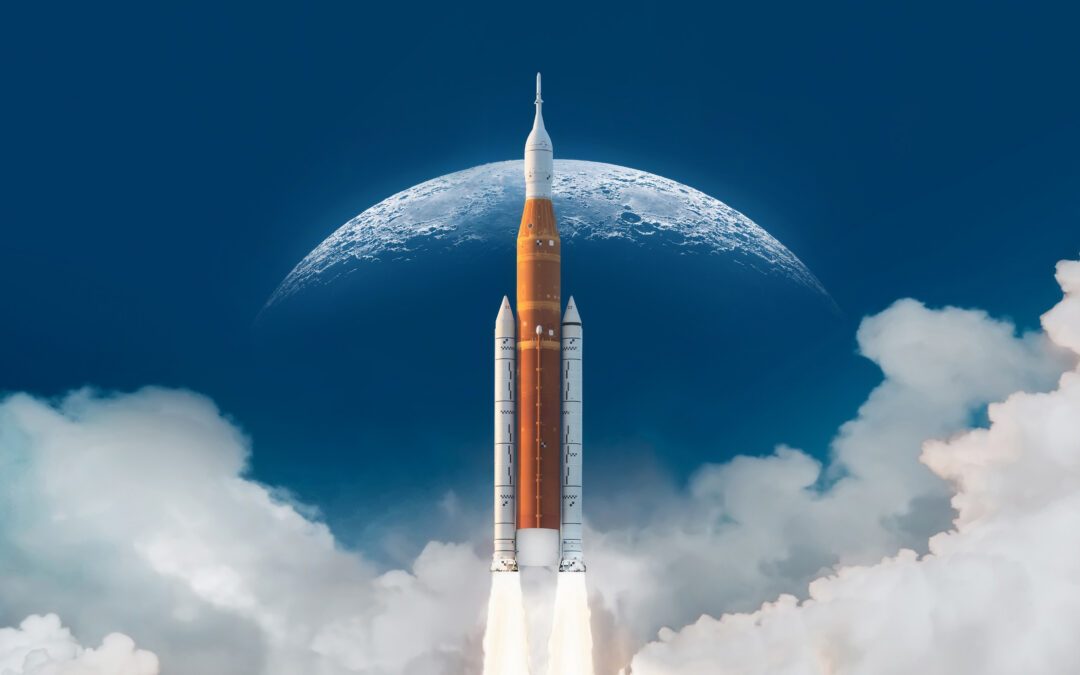
At 8:12 p.m. ET tonight, four astronauts aboard NASA’s Orion spacecraft will fire their engine for six minutes. When it’s over, they will be on an irreversible trajectory to the moon — the first humans to leave Earth’s orbit since December 1972.
The maneuver, called the translunar injection burn, is the defining moment of NASA’s Artemis II mission, which launched from Kennedy Space Center in Florida last night at 6:35 p.m. ET. Commander Reid Wiseman, pilot Victor Glover, mission specialist Christina Koch, and Canadian Space Agency astronaut Jeremy Hansen have spent today orbiting Earth while flight controllers verified every system aboard the spacecraft.
If the burn is approved and executed as planned, the crew will be committed to a 685,000-mile, 10-day journey around the far side of the moon and back.
“That’s a real big commitment point,” said Norm Knight, director of NASA’s Flight Operations Directorate, at a post-launch press conference Wednesday. Unlike the launch — eight thunderous minutes visible from miles along the Florida coast — the TLI burn will happen silently, 200 miles above Earth, watched only by instruments and the four people inside the capsule.
The mission carries a remarkable set of historic firsts. Glover becomes the first person of color to travel beyond low Earth orbit. Koch becomes the first woman. Hansen becomes the first non-American astronaut on a NASA deep space mission. All three will cross a threshold no human has reached in over half a century.
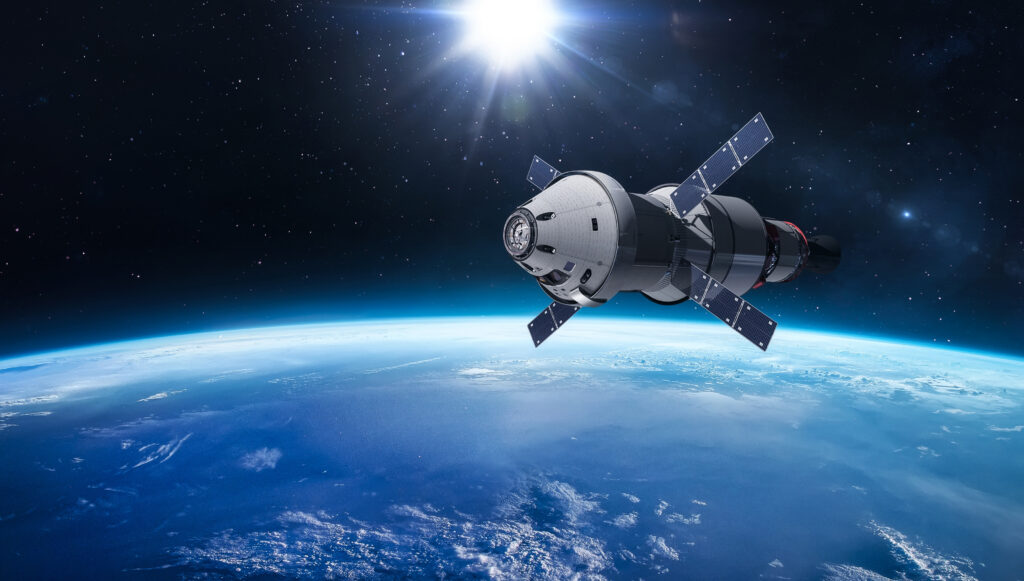
The crew is also on track to break the record for the farthest distance any human has ever traveled from Earth. At its most distant point — 4,700 miles beyond the far side of the moon — Artemis II will surpass the mark set by the crippled Apollo 13 crew in 1970.
On Monday, April 6, the astronauts will conduct a roughly three-hour flyby of the lunar far side — a region that some crew members will be among the first humans to see with their own eyes, outside of photography. During that pass, the spacecraft will briefly lose radio contact with Earth entirely.
NASA designed the mission speed deliberately. At 24,500 miles per hour, Orion stays on what’s called a free-return trajectory — meaning if anything goes wrong, the moon’s own gravity will slingshot the crew back toward Earth automatically, without requiring any additional engine firings. It is a built-in escape hatch engineered into the physics of the flight.
The mission is a precursor to Artemis III, which aims to return astronauts to the lunar surface. But for tonight, the mission is narrower and more immediate: a six-minute burn, a crew of four, and a journey no human has attempted since the last Apollo astronaut left the moon’s surface and said, “We leave as we came, and, God willing, we shall return.”
They are returning.