

If your relationship has been quietly struggling, the next 48 hours might determine whether it survives. Research tracking couples over an entire year found that relationships were 2.5 times more likely to end during the two weeks surrounding Valentine’s Day than during fall or spring. When researchers controlled for relationship length, prior history, and gender, the odds jumped to more than five times higher.
This isn’t about Valentine’s Day destroying healthy relationships. The increase in breakups appeared only among couples who were already struggling — not among those who were stable or getting stronger. Valentine’s Day doesn’t create doubt. It functions as a spotlight, forcing people to confront questions they’ve been postponing for months: Are we happy? Are we moving forward? Is this relationship something I actually want to celebrate?
Valentine’s Day Demands Performance, Not Just Reflection
Psychologists call moments like Valentine’s Day “temporal landmarks” — dates that divide time into a psychological before and after. New Year’s Eve works this way. So do birthdays and anniversaries. These landmarks prompt people to take stock of their lives and make decisions they’ve been avoiding. The difference is that Valentine’s Day carries unusually heavy commercial and social weight.
In the weeks leading up to February 14th, advertising and social media amplify expectations about what counts as love: gifts, effort, public displays, visible commitment. Taking part in the Valentine’s Day ritual signals that a relationship is intact and future-oriented. Opting out invites questions. The holiday doesn’t just invite reflection — it demands a performance. And for people who’ve been quietly doubting their relationship, performing romance they no longer feel becomes unbearable.
22% End Relationships to Avoid Gift Obligation
The timing of these breakups reveals something uncomfortable about human psychology. Most happen before Valentine’s Day, not after. In a nationally representative survey, 22% of American adults said they ended relationships before Valentine’s Day specifically because they didn’t want their partner to buy gifts or spend money when they already knew the relationship was ending.
Ending a relationship after Valentine’s Day can feel deceptive, especially if gifts were exchanged or plans were made. Many people would rather leave than accept gestures that imply a level of commitment they’re unsure they can sustain. The sense of being torn — wanting to avoid hurting a partner while also feeling unable to keep pretending — reflects what psychologists call ambivalence. It’s not indifference. It’s the uncomfortable experience of holding competing motivations simultaneously.
The Holiday Reveals What’s Missing
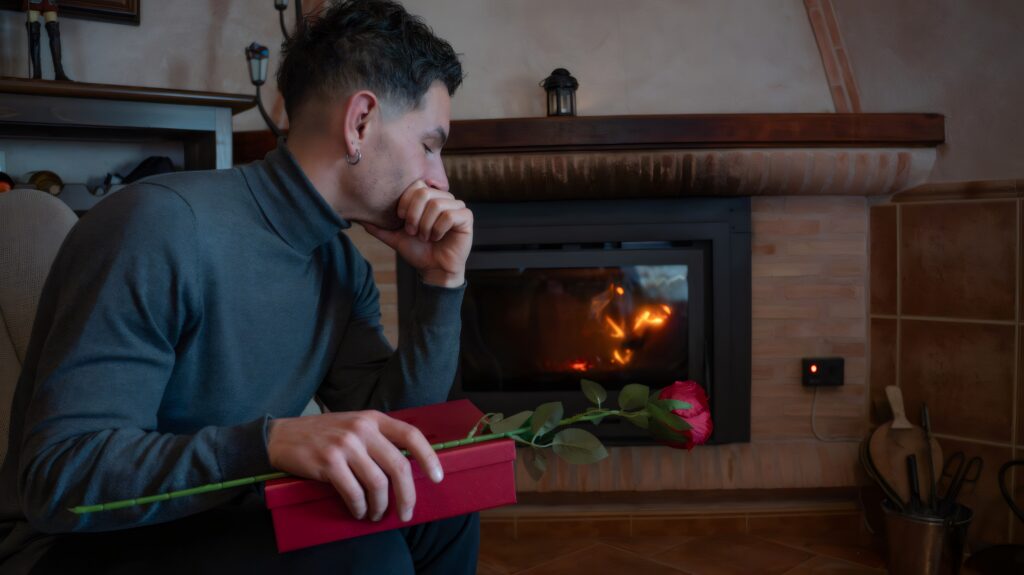
Consumer research shows that Valentine’s Day tends to evoke polarized reactions. People are far more likely to either love or loathe the holiday than feel neutral about it. For couples in strong relationships, Valentine’s Day offers a chance to express feelings they already have. For couples who’ve been drifting apart, the holiday magnifies what’s absent.
When you’re surrounded by cultural messages about passion and connection, it becomes harder to ignore that those feelings have faded from your own relationship. The advertising, the store displays, the constant reminders that love should look a certain way — all of it creates pressure that stable couples can handle easily and struggling couples find excruciating.
Why Some Relationships Survive the Spotlight
Not every relationship on shaky ground ends during Valentine’s Day. Research suggests that couples who’ve been together less than two years are more likely to emphasize the holiday and use it as proof the relationship is working. New couples see Valentine’s Day as an opportunity to deepen their bond. Longer-term couples who are struggling, however, often find that the holiday crystallizes doubts they’ve been carrying for months.
The people most likely to end relationships around Valentine’s Day are those who’ve been feeling ambivalent for a while. They’re not making impulsive decisions. They’re accelerating choices that were already unfolding. Valentine’s Day simply provides the deadline — a moment when private uncertainty becomes impossible to ignore.
The Reckoning Is Already Happening

If you’re reading this on Valentine’s Day and your relationship feels fragile, the research suggests something important: the doubt you’re experiencing didn’t start today. Valentine’s Day isn’t creating problems in your relationship. It’s revealing them. Whether you choose to address those problems or end the relationship entirely, the holiday has already done its work as a temporal landmark — forcing you to decide whether this relationship is something you want to carry into the rest of the year, or something you’re finally ready to let go.