

Strip work down to its essentials and this is what remains: input, output, targets met, value created, performance delivered. The system keeps moving with little concern for the human energy required to keep it running. Almost half of employees worldwide say they’re currently burned out. Nearly three-quarters of US workers report that workplace stress affects their mental health. Exhaustion isn’t a personal failing — it’s engineered into how offices were designed.
This machine-like approach to work isn’t accidental. It has deep roots in the late 19th century and the ideas of Frederick Taylor, a US engineer whose methods shaped modern management by treating workers as parts of a machine — measured, paced, optimized. Obviously, a lot has changed since then. We understand far more about mental health and human capacity for work. Yet many workplaces still operate with a strict focus on performance and goals, as if humans are infinite and endlessly replaceable.
Your Brain Wasn’t Built for Cubicles
Human brains evolved to solve problems related to surviving outdoors in unstable conditions. If you wanted to design a workspace directly opposed to what the brain naturally does well, you’d come up with a cubicle. The brain operates within an “evolutionary performance envelope” — specific conditions under which it processes information best. Modern offices violate most of them.
Neuroscience research reveals humans naturally seek environments that provide both prospect and refuge. Prospect means the ability to observe your surroundings. Refuge means having a secure place to retreat. Open office plans create prospect without refuge. Traditional cubicles provide neither. The result is constant low-level stress as your nervous system scans for threats it can’t escape.
Humans move through the world as sensory organisms first and knowledge workers second. Before the rational brain weighs in, the nervous system constantly scans light, sound, temperature, and motion to decide whether you’re safe or under strain. When those signals are chaotic — too bright, too loud, too unpredictable — the body goes into subtle defensive mode. This drains attention and shortens patience. Performance at work becomes inseparable from the sensory landscape around you.
The Depletion Economy
Modern workplaces function like extractive industries. They use people up for productivity with little thought for long-term cost. While organizational psychology highlights motivation and engagement as drivers of performance, it often overlooks what happens to people’s time, energy, and health once they’re spent at work. Many models assume these human resources are limitless, focusing on outputs rather than what gets left behind.
Work can drain your energy, attention, and health in ways that take years to undo. Without opportunities to recover and regenerate, this approach leads to depletion, disengagement, and burnout. The system treats renewal as optional rather than essential. Performance reviews measure productivity but ignore whether that productivity came at the cost of someone’s wellbeing. Promotions reward those who work unsustainable hours as if endurance is virtue rather than warning sign.
What Human-Centered Actually Means
Renewal isn’t a luxury. It starts with recognizing that people are not infinite or endlessly replaceable. Designing work as though this doesn’t matter comes at a real cost. In practice, regeneration shows up in everyday management decisions. Workload, autonomy, recovery time, recognition, and support determine whether work depletes people or helps them recover and grow. Human needs and wellbeing have to sit at the center of how work is organized, not treated as afterthoughts once performance targets are set.
Psychological safety becomes essential. Regenerative workplaces are those where people can speak up, raise concerns, and take reasonable risks without fear of blame. This is where leadership matters. Organizations need to ask hard questions about the true impact of management practices: do they drive absence, presenteeism, and turnover — or do they enable learning, growth, and renewal?
The 2026 Office Rethink

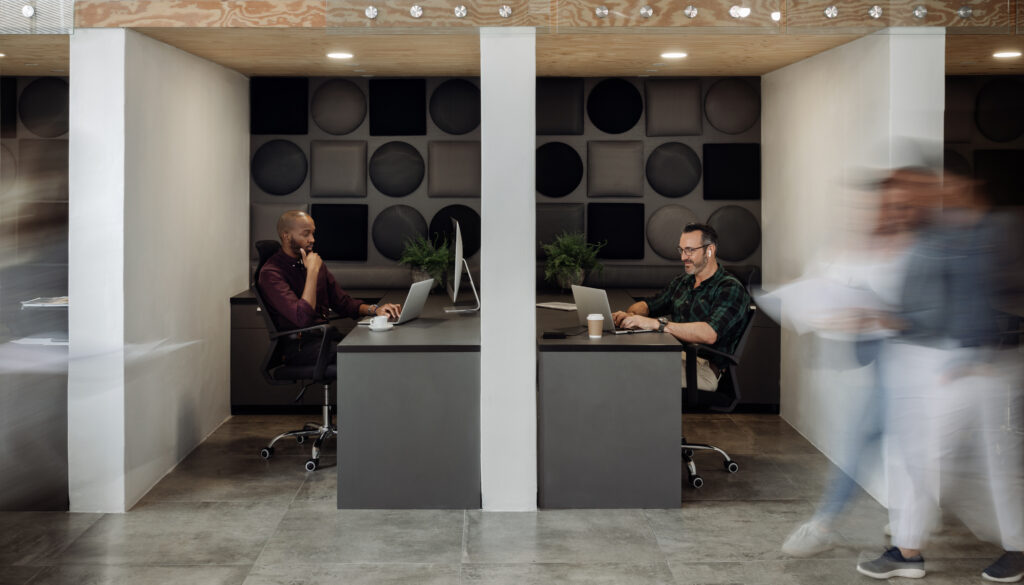
Current workplace design trends increasingly treat the office as a collection of zones rather than one-size-fits-all space. Micro-zones for calls and heads-down work. Collaboration areas that foster connection without forcing constant interaction. Quiet pods that give employees bookable, enclosed spaces guaranteeing privacy for important tasks. The brain interprets choice as a signal of safety rather than threat, which reduces stress hormones and sharpens cognition.
Modern offices increasingly draw inspiration from hospitality, creating café areas and lounge spaces that encourage informal interaction. The workplace becomes a destination for connection rather than obligation for task completion. But this only works when paired with spaces that support the individual work that 89% of employees cite as their most important activity. If offices are to earn the commute, they need quiet areas for desk-based focus work, acoustically balanced layouts, and lighting schemes that support concentration.
The shift isn’t about aesthetics. It’s about acknowledging that human biology doesn’t change to accommodate management theories. Productivity looks different when wellbeing is part of the design from the start, not added later as a perk. Sustainable performance is possible. It just means actually designing workplaces that protect and renew the people working in them instead of treating them like expendable machine parts that can be replaced when they burn out.