
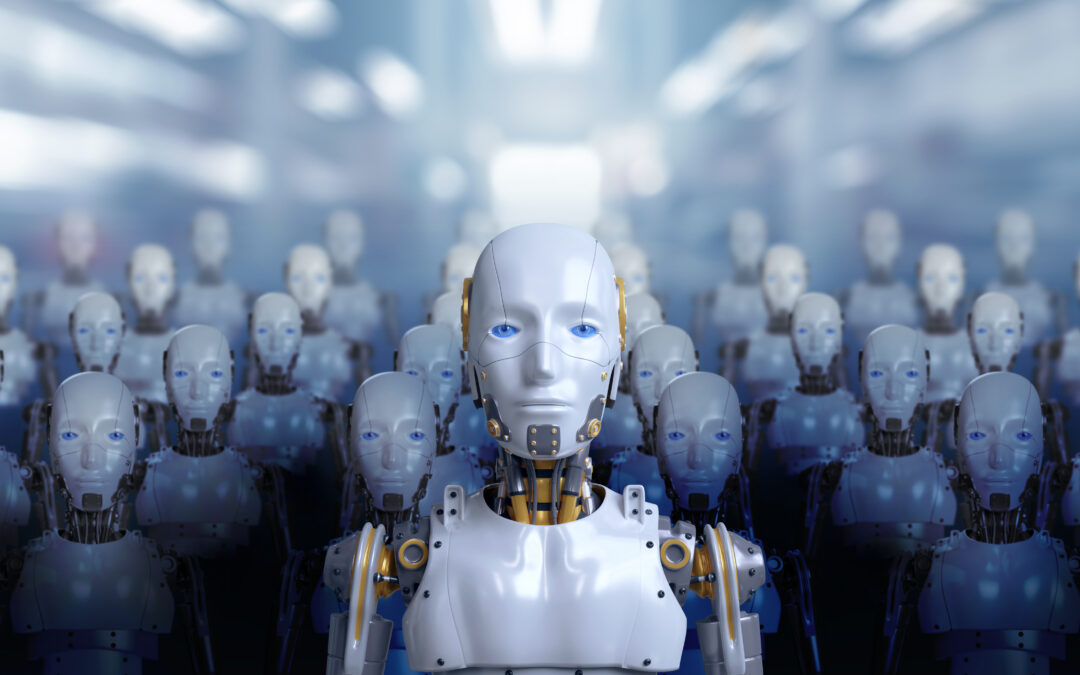
Last Wednesday, a humanoid robot walked down a red-carpeted White House hallway and delivered a speech. It greeted an audience of first spouses from 45 nations in 11 languages — with perfect pronunciation — before retracing its steps and leaving the room. The whole appearance lasted about two minutes.
What followed was more significant. First Lady Melania Trump took the stage and asked the assembled delegates to imagine a humanoid AI educator named Plato — always patient, always available, capable of delivering personalized lessons in classical studies, mathematics, science, and philosophy, adaptive to each child’s learning speed and emotional state. “Very soon,” she said, “artificial intelligence will move from our mobile phones to humanoids that deliver utility.”
It was the highest-profile showcase of humanoid robotics in the United States to date — and a signal that the question of robots in classrooms has moved from science fiction into active policy discussion at the highest level.
Figure 03 and the Race to Build Them
The robot was Figure 03, the third-generation humanoid from Sunnyvale-based startup Figure AI, introduced in October 2025. It was designed primarily for household tasks — laundry, cleaning, dishes — and is not currently marketed for educational use, nor does the company hold any active federal education contracts. Its appearance was a demonstration of capability, not a product launch.
Figure AI’s facility is designed to produce up to 12,000 humanoid robots per year, with a stated goal of 100,000 units over four years. The company competes in a rapidly expanding field alongside Tesla’s Optimus and Boston Dynamics, backed by Nvidia and increasingly watched by the White House as part of a broader competition with China, which has been showcasing its own humanoid robots at high-profile events this year. The first lady framed the moment explicitly in terms of long-term economic competition: embracing AI-directed learning, she said, would add to U.S. “long-term economic superiority.”
What the Research on Classroom Robots Actually Shows
The vision of a humanoid classroom educator isn’t entirely speculative. Robots including NAO and Pepper have been piloted as language tutors, STEM partners, and co-teachers in schools globally for several years. A systematic review of field studies on social robots in classrooms found that the technology consistently raises student engagement and motivation, with the strongest evidence in STEM education, language learning, and special education — particularly for students on the autism spectrum, who respond well to the predictable, repeatable interactions robots provide.
The honest caveat is that measurable learning gains remain small to moderate. Engagement is not the same as retention. A robot that holds attention more effectively than a human teacher doesn’t necessarily produce better outcomes on assessments. The research is encouraging enough to justify continued deployment, but too thin to support the sweeping vision of robots replacing or substantially supplementing human educators at scale.
The practical barriers are also significant. Humanoid robots currently priced for educational use range from $9,000 to $30,000, with total ownership costs running 40-50% higher when software, training, and maintenance are included. For under-resourced schools — the institutions that might benefit most from an always-available, infinitely patient teaching aid — the economics don’t yet work.
A Footnote Worth Knowing
The White House appearance gave Figure AI its most prominent showcase to date, but the company is simultaneously facing a pending lawsuit from its former head of product safety. Robert Gruendel filed suit in federal court in California in November 2025, alleging wrongful termination after he raised concerns that Figure’s next-generation robots moved at superhuman speed and generated force sufficient to fracture a human skull. Figure AI disputes the allegations. The suit remains unresolved.
The Question Behind the Spectacle
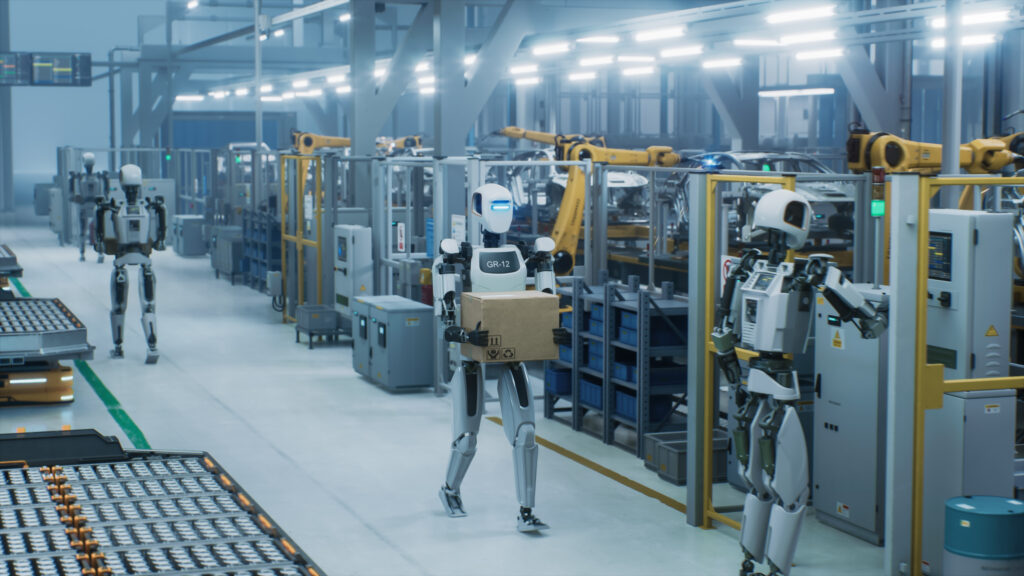
A humanoid robot delivering a welcome in 11 languages in the East Room is, by any measure, a genuinely remarkable moment. Whether it represents an inflection point for education — or a very expensive demonstration of technology that isn’t classroom-ready — depends almost entirely on decisions that haven’t been made yet: about cost, access, safety standards, and what role, if any, a machine should play in a child’s intellectual development.
The vision of “Plato” — a humanoid educator in every home, patient and personalized, available at any hour — is compelling enough that it deserves serious examination. It also deserves the kind of scrutiny that tends to get lost when a robot walks down a red carpet.