The version of this technology you’re imagining — a machine that reads your mind in real time, without your knowledge or consent — doesn’t exist yet. But the version that does exist is strange enough on its own, and it’s advancing faster than the legal and ethical frameworks designed to govern it.
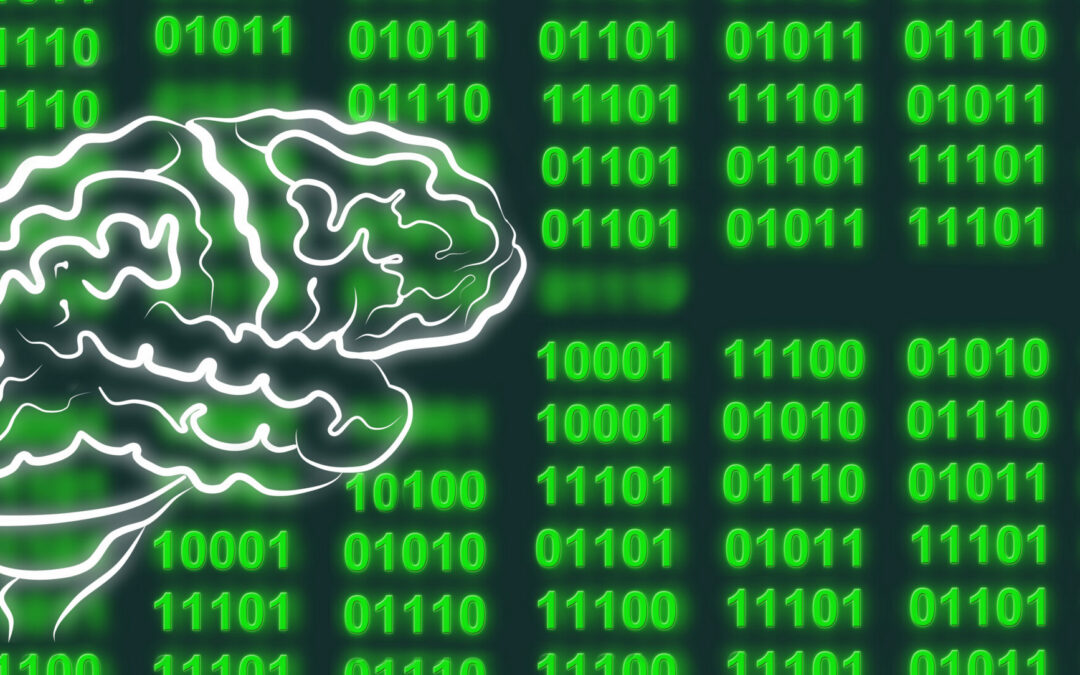
Researchers have now built AI systems that can translate brain activity into readable text without surgery, without implants, and without requiring the subject to speak a word. The primary tool is functional MRI — the same scanner used in hospitals to detect tumors and assess brain damage. The difference is what’s being done with the data coming out of it.
What the Brain Decoder Actually Does
In a landmark study from the University of Texas at Austin, published in Nature Neuroscience, researchers trained an AI decoder on fMRI scans taken while participants listened to hours of spoken stories. The result was a system that could reconstruct the general meaning of what someone was hearing — or imagining — with enough accuracy to correctly identify which of several stories a person was silently recalling 100% of the time.
A separate technique called “mind captioning,” developed by researchers at UC Berkeley and Japan’s NTT Communication Science Laboratories, goes further. Rather than decoding language centers of the brain, it translates visual and semantic brain activity into descriptive text — generating sentences describing what a person is seeing or picturing in their mind, without relying on the brain’s language system at all. In tests, the system worked even when participants were recalling video content from memory rather than actively watching anything.
These systems are not reading words. They are reading meaning — the semantic gist of what someone is thinking about, reconstructed by AI from patterns of blood flow in the brain.
The Medical Case Is Genuine and Compelling
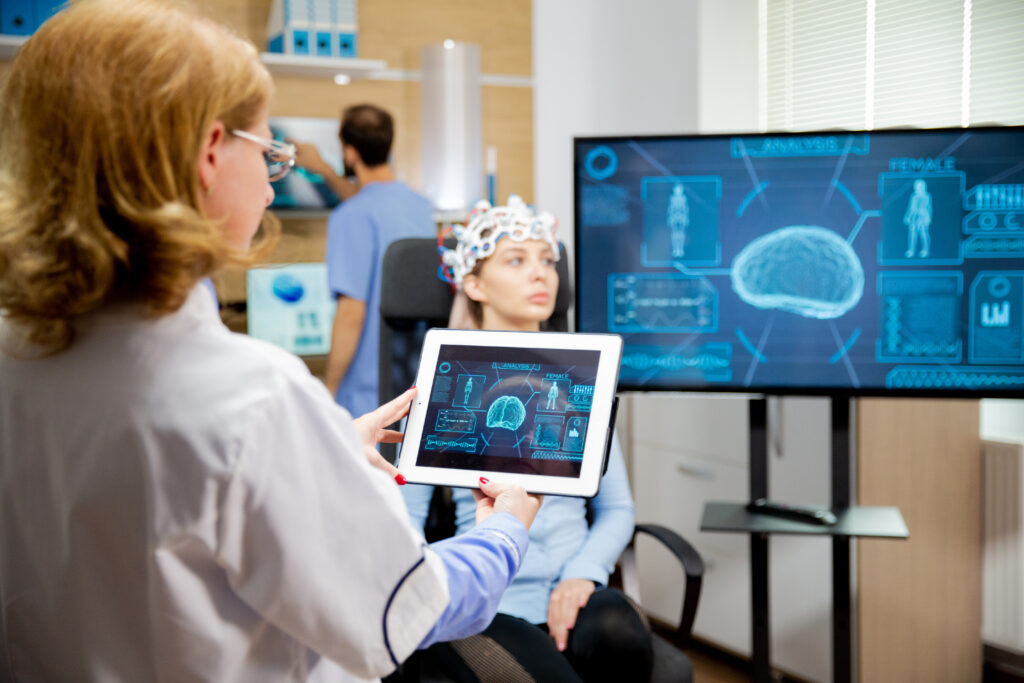
The primary driver of this research is not surveillance. It’s communication. For people with ALS, locked-in syndrome, severe paralysis, or strokes that destroy the ability to speak, a brain-computer interface that can decode intended speech could restore something most people take entirely for granted.
Stanford researchers have already demonstrated that inner speech — the silent mental rehearsal of words — can be decoded from implanted electrodes with up to 74% accuracy from a vocabulary of 125,000 words. A separate UC Berkeley team built a system that streams a paralyzed person’s thoughts through a speaker in near real time, giving them back a voice. These aren’t hypothetical applications. They are already working in clinical settings.
The Privacy Problem Nobody Has Solved
The reassurance researchers offer is consistent: current systems require subject cooperation. You have to lie inside an fMRI machine for hours while the AI trains on your specific brain patterns. You can’t decode someone’s thoughts without their knowledge — at least not yet.
The word “yet” is doing a lot of work in that sentence. Alex Huth, the computational neuroscientist at UC Berkeley whose lab developed the language decoder, acknowledged that as models grow more sophisticated, the line between assistive tool and invasive surveillance will blur. His own research showed the decoder could pick up what participants were thinking about even when they hadn’t been asked to think about it.
Łukasz Szoszkiewicz, a neurorights expert, has argued that mental privacy protections cannot wait for the technology to become a clear threat. “Neuroscience is moving fast,” he told researchers, “and the assistive potential is huge — but mental privacy and freedom of thought protections can’t wait.” Colorado, Minnesota, and California have already passed neurorights legislation attempting to protect brain data. Most of the world has not.
The Gap Between Science and Law

The deeper issue is one of timing. Laws protecting mental privacy are being written while the science is still defining what mental privacy even means in this context. The fMRI machines driving most of this research are not portable — they are multi-ton, multi-million-dollar hospital devices. But EEG headsets, which measure electrical brain activity through scalp sensors, are increasingly affordable and consumer-facing. Several companies are already marketing them for focus and meditation.
The algorithmic insights from fMRI research — that large language models can decode meaning from neural signals — will eventually transfer to smaller, cheaper, more portable devices. What requires a hospital today may not require one in a decade.
A Technology Worth Paying Attention to Now
The current moment in brain-computer interface research resembles the early internet in one specific way: the people building the tools are thinking about what they make possible, while the people who should be setting the rules are still figuring out what questions to ask. The medical applications are real and worth celebrating. The privacy implications are real and worth taking seriously. Both things are true at the same time, and the window for getting the balance right is narrowing.