

There’s a decent chance your nightstand looks less like a sleep sanctuary and more like a carefully curated staging area. Book, phone, water bottle, whatever you’re currently in the middle of — possibly snacks. If you’ve been doing this and feeling vaguely guilty about it, a new trend just gave you permission to stop.
“Bedtime stacking” is the name Gen Z has attached to the practice of assembling everything you might want — journals, laptops, beauty products, snacks, books, a neck massager if you’re really committed — into a contained cluster around your bed at the end of the day. The idea is to settle in early and move deliberately between activities without getting up. It went viral in January after Sweden-based creator Linnéa Pham posted a walkthrough of her own stack to TikTok, earning more than 37,000 likes and a flood of responses from people saying they’d been doing this for years without a name for it.
Doomscrolling’s More Intentional Cousin
Pham frames bedtime stacking as a deliberate upgrade from “bed rotting” — the Gen Z term for collapsing into bed and doomscrolling until you pass out. The distinction is intent. Where bed rotting is passive and often leaves people feeling worse, bedtime stacking involves actually choosing what you do with that horizontal time: reading, journaling, skincare, puzzles, watching something you actually want to watch.
“While doomscrolling can sometimes make you feel guilty, like you’re wasting time, bed stacking feels intentional,” Pham told Newsweek. “You may not be physically active, but you’re mentally engaged.”
The trend borrows loosely from the productivity concept of habit stacking — the idea that layering small positive behaviors together makes them easier to maintain. Instead of reading, journaling, and doing skincare in separate rooms at separate times, you compress them into one cozy, stationary ritual.
The Time Scarcity Driving the Whole Thing
What makes bedtime stacking more than a cute organizational trend is what it reveals about how people actually feel at the end of the day. Dr. Jordan Ashley, a sociologist and founder of the Souljourn Yoga Foundation, told Newsweek the trend reflects something specific about modern anxiety around time.
“Many young adults feel pressure to do everything at once: stay informed, be productive, maintain hobbies, practice self-care, and remain socially connected,” Ashley said. The bedtime stack becomes a way to compress all of those competing demands into one guilt-managed block, rather than choosing between them.
Ashley also flagged what the trend quietly reveals about boundaries. When laptops, planners, skincare routines, and entertainment coexist in the same physical space, she notes, it reflects difficulty separating different roles of the self. The bed stops being a place where you switch off. It becomes both a sanctuary and a performance stage where, as Ashley puts it, “even rest can become content.”
Revenge Bedtime Procrastination Was Already Winning
Bedtime stacking is, in a real sense, a response to a pattern researchers identified in a 2014 paper in Frontiers in Psychology: people who have little autonomy during the day deliberately delay sleep to reclaim a sense of control, scrolling or binge-watching past the point of exhaustion as a kind of silent protest against a day that didn’t belong to them.
Research consistently shows that people who exercise the most self-control during the day are the least likely to stick to a reasonable bedtime. The more obligations you carry, the more your brain demands its own time — even at the expense of sleep.
Bedtime stacking doesn’t fully solve this, but it redirects it. Rather than drifting into passive consumption until midnight, the stack gives the evening some structure and a clear set of things to move through, which creates a more natural stopping point.
The Psychological Pull of the Bed Specifically
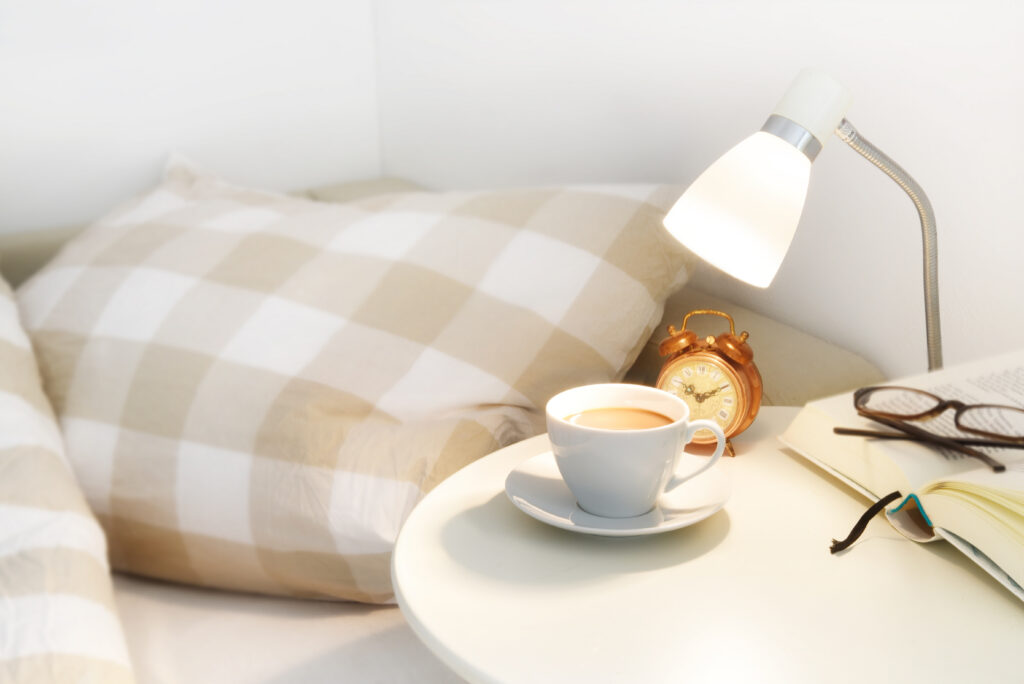
There’s a reason this all happens in bed rather than the couch. Ashley points to the bed’s symbolic weight as a space of safety and containment. Bringing everything into that space may be an attempt to create a controlled environment where multiple demands can be managed without fully re-entering the external world.
It’s also just where most people’s evenings already end up. The honest version of most people’s wind-down routines involves horizontal surfaces, small screens, and a loose collection of objects that have migrated from other rooms over time. Bedtime stacking just makes that deliberate.
Reclaiming Evenings That Used to Just Disappear
The appeal isn’t really about Gen Z or TikTok. It’s about the underlying impulse to reclaim evenings eaten by obligations, and to do it in a way that doesn’t leave you feeling like you wasted them. There’s something quietly radical about deciding your bed can hold multiple versions of yourself at once: the person who wants to read, the one who needs to decompress, the one who hasn’t done skincare in three days.
Whether it counts as rest is a fair question. Whether it beats lying awake scrolling news until 1 a.m. seems less debatable.