

Simple ways to make plant-based living more inviting, flexible, and family-friendly
Going vegan isn’t just a diet change—it’s a lifestyle shift. And when you’re trying to bring your whole family along for the journey, it can feel a little overwhelming. Kids might miss their favorites. Your partner might be skeptical. Grandparents might side-eye the tofu. But here’s the good news: introducing veganism doesn’t have to be dramatic or all-or-nothing. In fact, the slower and more thoughtful the shift, the more likely it is to stick.
If you’re ready to explore plant-based living with your family, here’s how to do it in a way that feels supportive, flexible, and actually enjoyable.

Start With Curiosity, Not Demands
Instead of declaring your home “vegan starting Monday,” open a conversation. Talk about why you’re exploring this lifestyle—whether it’s for health, animals, sustainability, or all three. Invite your family to share their thoughts, questions, or even hesitations. Framing the transition as a shared discovery (rather than a top-down decision) helps everyone feel heard and included.
Make Familiar Foods, Just Vegan
Comfort foods are often the bridge between resistance and curiosity. You don’t have to ditch family favorites—you can remix them. Think spaghetti with lentil marinara, vegan tacos with black beans and avocado, or plant-based nuggets with sweet potato fries. Once your family sees they can enjoy the flavors they love, they’ll be more open to exploring new ones too.
Let Kids Be Part of the Process
Children are more likely to try new things when they’ve helped choose or create them. Let them pick out plant-based recipes, help with prep, or taste-test different non-dairy milks. Give them small wins—like their “signature” smoothie or homemade vegan pizza—to build ownership and excitement around the change.
Don’t Make It About What They’re “Losing”
Focus on what they’re gaining. New flavors, new traditions, fun cooking experiments, and even an opportunity to care more about animals or the planet. Framing the experience in terms of abundance (not restriction) helps shift the mindset from “I can’t have that” to “I get to try this.”
Keep Your Kitchen Mixed—At First
If your family isn’t ready to go all-in, keep your kitchen a “both-and” space for now. Serve plant-based versions of your meals alongside old favorites. Offer dairy-free and dairy options side-by-side. This gentle transition shows respect for everyone’s pace and allows gradual, sustainable change to take root.
Be the Example—Not the Enforcer
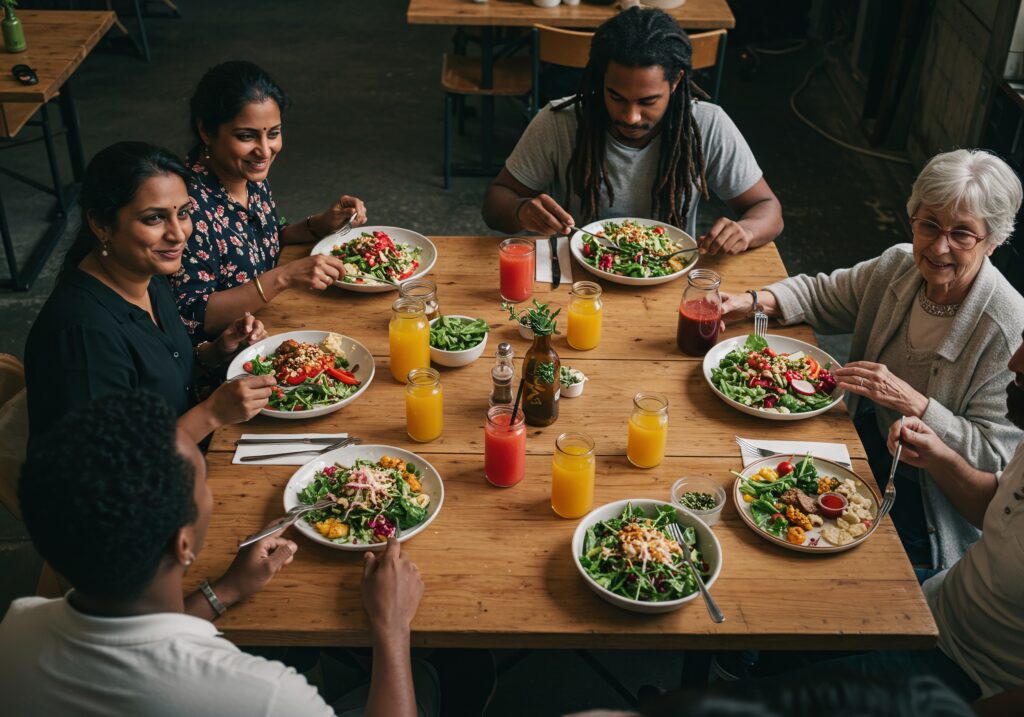
When your family sees you enjoying your meals, feeling energized, and approaching the change with joy (not pressure), they’re more likely to get curious. Avoid turning every dinner into a debate. Instead, show them how vibrant and fulfilling vegan eating can be—by living it, not lecturing it.
Celebrate Small Shifts
Did someone try oat milk in their cereal? Celebrate it. Did your teen say the tofu wasn’t terrible? That’s a win. Small shifts add up over time—and positive reinforcement keeps the momentum going. It’s not about perfection. It’s about progress.
Final Thought
Bringing your family into a vegan lifestyle isn’t about overnight change. It’s about planting seeds—of awareness, curiosity, and compassion—and giving them time to grow. The goal isn’t to control what they eat. It’s to invite them into something meaningful, delicious, and empowering.
And if you make space for that journey to feel good? They just might surprise you.