
Here’s something that won’t show up in your dating app’s marketing materials: in 2023, Americans lost $1.14 billion to romance scammers, making it the costliest imposter fraud category tracked by federal agencies. The median loss per person? A sobering $2,000. And those numbers have only climbed since.
If you’re thinking “that would never happen to me,” you’re in good company with the tens of thousands of people who file reports annually. Most victims thought the exact same thing. But romance scammers aren’t targeting the gullible or desperate. They’re targeting anyone with a dating profile, a social media presence, or a lonely Tuesday night spent scrolling.
Why Your Brain Is the Perfect Target
The psychology behind romance scams is devastatingly simple: scammers weaponize the very brain chemistry that makes us human. When we develop feelings for someone, our brains release dopamine and oxytocin, the same chemicals that create attachment in genuine relationships. These hormones cloud judgment and make rational decision-making nearly impossible.
Dr. Helen Fisher’s research on attraction and attachment in mammals reveals that too much dopamine leads to impulsive behavior and poor choices. Add oxytocin into the mix, which surges when someone makes us feel trusted, and you’ve got a neurochemical recipe for vulnerability. Scammers don’t just steal money. They hijack your biology.
A study published in Cyberpsychology found that victims tend to score high on impulsivity and sensation-seeking traits, are more trusting, and have addictive tendencies that make it difficult to walk away once the narrative has them hooked. The kicker? Higher education correlates with increased vulnerability, contradicting the myth that only “naive” people fall for scams.
The Red Flags That Actually Matter
The most immediate warning sign? Someone who refuses to meet in person. Scammers will craft elaborate excuses: they’re deployed overseas, working on an oil rig, stuck in a foreign country. These scenarios aren’t random. They’re designed to justify why video calls always fail and in-person meetings never materialize.
Love bombing comes next. When someone showers you with excessive affection, claims you’re their soulmate within days, and mirrors your interests with suspicious perfection, your dopamine receptors are lighting up like a slot machine. That’s the point. According to the FTC, romance scammers move relationships to permanent status within weeks, not months.
Watch for information gaps. Are their photos consistently blurry or oddly angled? Is basic information about their work vague or contradictory? Do they disappear for days without explanation? Legitimate romantic interests don’t operate like intelligence assets. They answer direct questions directly.
When Money Enters the Picture
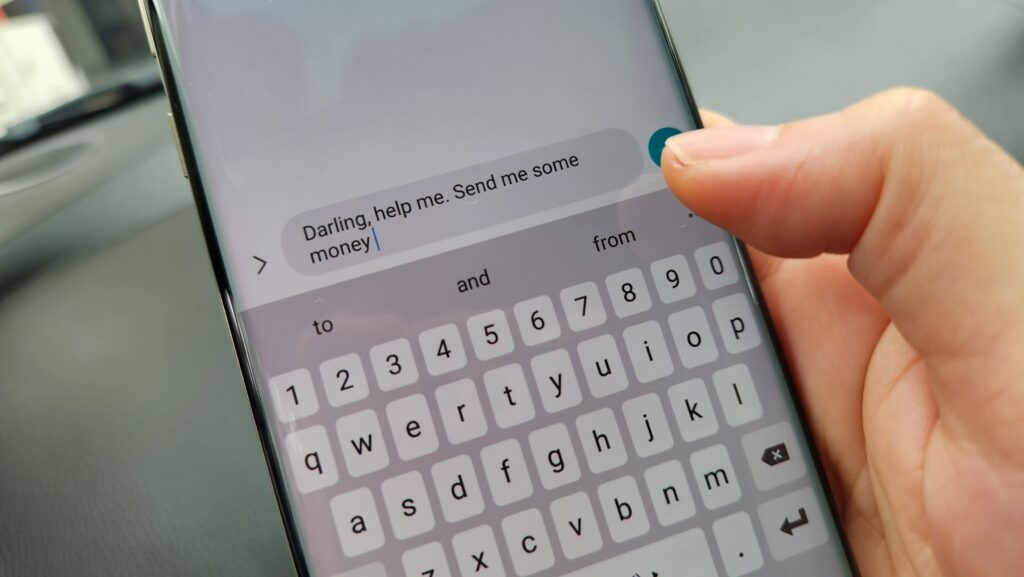
Here’s where the scam shifts into high gear: the sudden crisis. A sick relative, a lost passport, an urgent business deal. In 2022, nearly 25% of romance scam reports involved claims that a friend or relative was sick, hurt, or in jail. The second most common tactic? Offering investment advice.
This evolution is significant. Traditional romance scams asked for direct financial help. Modern scammers, particularly those running “pig butchering” operations, position themselves as successful cryptocurrency or forex traders who’ll teach you their secrets. By 2024, crypto-related investment frauds reached $5.8 billion, with romance scams representing a massive portion of those losses.
The most common platforms? Forty percent of victims said the initial contact came through social media — Instagram, Facebook, even LinkedIn. Dating apps account for another significant chunk. That innocent “we’re fans of the same team!” comment from a stranger could be the opening move in a calculated con.
The New Twist: Sextortion
Younger victims face an additional threat that’s exploded in recent years. Reports of sextortion — where scammers convince victims to share intimate photos, then threaten to share them publicly — increased eightfold between 2020 and 2023. People aged 18-29 are six times more likely to report this particular nightmare than older victims.
The FBI warns that these photos become leverage for ongoing extortion. Send money or your family sees everything. The shame prevents many victims from reporting, which is exactly what scammers count on.
The Isolation Playbook
Scammers work to separate you from friends and family who might spot the con. They’ll criticize your loved ones, suggest they don’t understand what you have together, or insist on keeping the relationship private. This isolation serves a dual purpose: it removes outside reality checks and deepens your emotional dependence on the scammer’s validation.
Research on romance scam victims describes this as creating a “hyperpersonal relationship” — an intensely intimate bond that develops faster online than it ever could face-to-face. The distance isn’t a bug in the system. It’s the feature that makes the whole operation work.
Why It Hurts Twice

Victims experience what researchers call the “double hit”: financial devastation combined with the psychological trauma of losing a relationship they believed was real. Some describe the grief as equivalent to experiencing an actual death. Many suffer symptoms resembling post-traumatic stress disorder, and some contemplate suicide.
The shame compounds the damage. Victims often don’t report these crimes or seek help because they feel foolish for falling for it. But understanding the neurochemistry involved should shift that perspective entirely. Your brain was doing exactly what evolution designed it to do — create attachment, trust, and bonding. Scammers just happen to be experts at exploiting those systems.
Protecting Yourself Without Closing Off
The goal isn’t paranoia. Online connections can lead to genuine relationships. But awareness creates protection. Do a reverse image search of photos. Tell a trusted friend about new romantic interests. Set firm boundaries about money — legitimate partners never ask for financial help before you’ve met in person, and they certainly don’t request payment via cryptocurrency, gift cards, or wire transfers.
If someone checks multiple boxes on this list, step back and evaluate with your prefrontal cortex, not your flooded dopamine receptors. Report suspicious profiles to dating platforms and file reports with the FTC. Your skepticism might save someone else’s life savings.
The heart wants what it wants. Just make sure what it wants is actually real.