

For more than 150 years, the ball-strike call has been one of the most human moments in American sports — a split-second judgment made by an umpire standing close enough to smell the pine tar, subject to error, argument, and the particular mood of a Tuesday afternoon in Cincinnati. Starting this season, that’s changing.
Major League Baseball is introducing an Automated Ball-Strike System in all 30 stadiums in 2026. Under the challenge format, human umpires still make every call — but each team gets two challenges per game to appeal to the computer, which tracks every pitch using Hawk-Eye cameras and renders a verdict in seconds. The graphic appears on the scoreboard. The count updates. The argument, for once, is over.
It is the most high-profile deployment of AI to replace a human judgment call in American professional sports. And the implications stretch well beyond baseball.
Hawk-Eye Doesn’t Have a Bad Day
The technology behind the system is the same Hawk-Eye pose-tracking used in tennis and cricket for ball-tracking and line calls. Cameras positioned throughout each stadium capture every pitch, calculating whether it crossed home plate within a strike zone calibrated to each individual batter — measured without shoes, to a precision that accounts for the fact that human height actually shortens later in the day.
Human umpires currently call roughly 94% of pitches correctly, according to UmpScorecards — a number that sounds impressive until you consider that MLB games feature somewhere between 250 and 300 pitches, meaning several wrong calls are baked into every single game. The machine’s accuracy, in testing, has been meaningfully higher, and unlike a human umpire, it doesn’t tire, doesn’t get rattled by a crowd, and has no unconscious preference for veterans over rookies.
Teams won challenges at a rate hovering around 50% in minor league testing — meaning roughly half of all human calls that were formally questioned turned out to be wrong. That is not a human failure so much as a human ceiling.
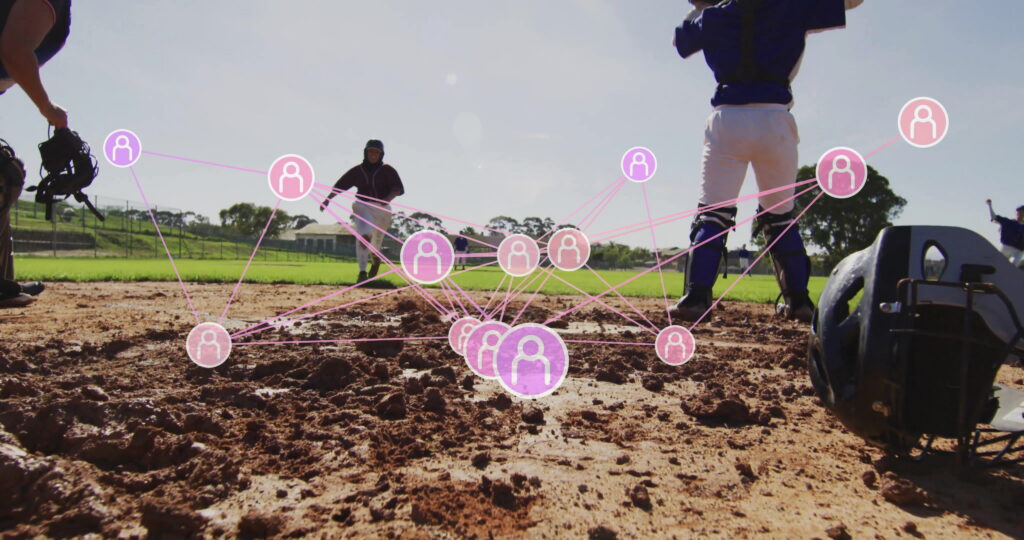
The Challenge System Is a Careful Compromise
What MLB has avoided — deliberately — is replacing human umpires outright. The challenge format keeps a person behind the plate for every pitch. The machine is an appeals court, not a replacement. It’s a design that acknowledges something the data can’t fully quantify: the human umpire is part of the cultural fabric of the game, a figure players, managers, and fans have a relationship with that cameras and algorithms can’t replicate.
This is the same tension playing out across dozens of industries right now. Radiologists whose imaging reads are now cross-checked by AI. Lawyers whose contract reviews are flagged by machine learning. Financial analysts whose models are stress-tested by algorithms that never sleep. In most of these cases, the human isn’t being eliminated — they’re being repositioned into an oversight role, with the machine handling volume and the person handling edge cases, accountability, and the parts that require genuine judgment under ambiguity.
What Baseball Teaches the Rest of Us
The MLB rollout is worth watching closely because it is one of the clearest real-world tests of a question the broader economy is quietly asking: when AI can perform a skilled task more accurately than a human, what is the human’s new role?
Baseball’s answer — at least for now — is that the human remains the default, with the machine available as a check. That’s partly tradition, partly union politics, and partly a genuine acknowledgment that accuracy isn’t the only thing that matters in a live human performance. The umpire who ejects a manager or navigates a bench-clearing situation is doing something a camera array cannot.
But the challenge system also changes the cultural contract in a quieter way: for the first time, a player, pitcher, or catcher can formally and publicly declare that a human judgment was wrong, and have that declaration verified in seconds. The umpire’s authority no longer rests entirely on finality. It rests on the proportion of calls the machine doesn’t overturn.
That shift — from unchecked human authority to human-plus-machine accountability — is one of the defining dynamics of work in the next decade. Baseball is just the most visible place it’s happening first.