
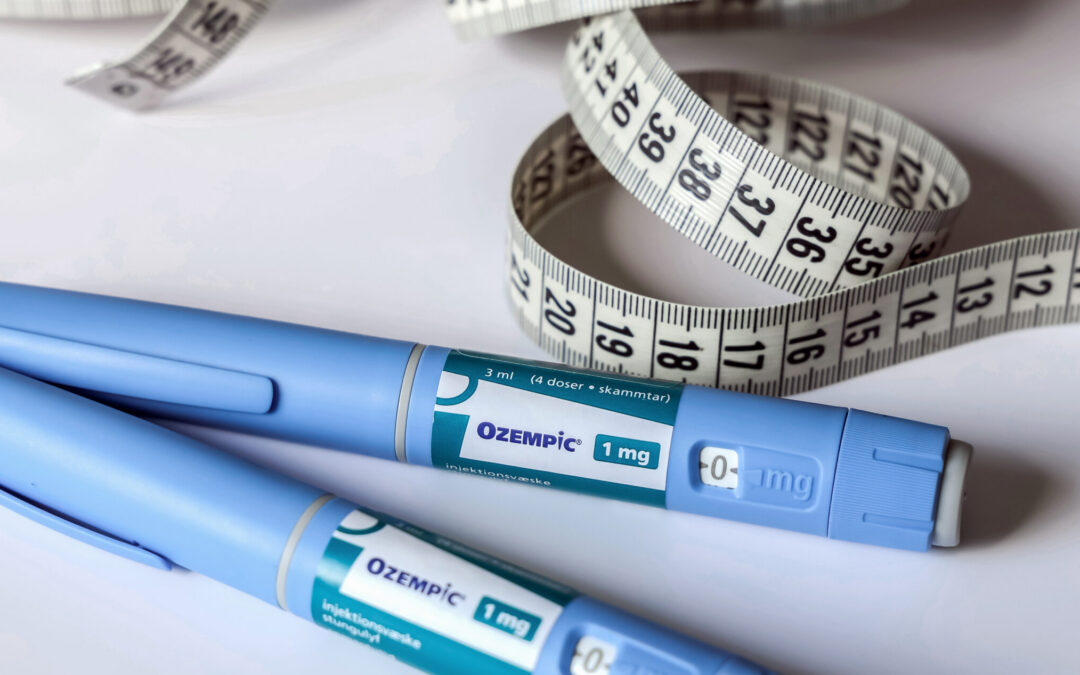
The conversation around Ozempic and other GLP-1 medications has mostly centered on the physical: weight lost, blood sugar managed, waistlines changed. What has received far less attention is the psychological terrain these drugs alter on the way in — and what they might leave behind.
A recent piece in the New Yorker by physician-writer Dhruv Khullar describes GLP-1 drugs as “moderation molecules” — tools that dial down primary desires, from food cravings to alcohol consumption, by dampening the dopamine signals that make those things feel urgent. The weight loss is real. So is something else: for a meaningful number of users, the drug doesn’t just quiet food noise. It quiets everything.
When the Moderation Molecule Goes Too Far
Anecdotal reports of reduced sex drive, flattened motivation, and diminished interest in previously enjoyable activities have circulated among GLP-1 users for some time. Now research is beginning to investigate why. A 2025 paper in the Journal of Sexual Medicine proposed that GLP-1 agonists may reduce sexual desire through serotonergic pathways in the brain — a mechanism that echoes how some antidepressants blunt libido as a side effect.
A Kinsey Institute survey of 2,000 adults found that roughly half of GLP-1 users reported the medication had impacted their sex lives — 18% said desire increased, 16% said it decreased. The split points to something important: these drugs interact with highly individual neurological and psychological profiles. “When we take a medicine in the hope that it will curb a particular desire,” notes Sarah Kawasaki at Penn State Health, “we’re meddling with a complex system.” That system, it turns out, doesn’t always sort neatly between the desires we want to reduce and the ones we don’t.
What Cravings Are Actually Doing

Psychotherapists have begun asking a more fundamental question: what were those cravings for in the first place? Many compulsive patterns — reaching for food, alcohol, sugar — function as substitutive desires, secondary habits developed as responses to early stress or unresolved tension. Someone who learned to self-soothe with food during a difficult childhood may find, on Ozempic, that the urge to snack disappears. But the underlying restlessness that created it doesn’t necessarily follow.
Removing the physiological pull may create psychological space — or it may simply expose what the craving was covering. Without the pull toward food or drink, some users find clarity; others encounter anxiety, emptiness, or a sense of flatness they can’t name. Therapists describe this as a rare and sometimes uncomfortable window into one’s own interior life — the kind of meta-cognitive view that usually takes years of work to achieve, suddenly arrived at via a weekly injection.
A Victorian Morality in Modern Packaging
There is also a cultural story playing out here. GLP-1 culture, as it exists online and in wellness spaces, tends to frame appetite as an error to be corrected. Cravings are weakness. Hunger is something to override. The ideal body is one that no longer wants very much.
This is, as one Psychology Today analysis puts it, a distinctly Victorian sensibility — restraint and self-mastery prized above all, desire coded as moral failure. The irony is that the same culture selling optimization often sells indulgence in the next breath. But the Ozempic conversation, in particular, has leaned hard into the language of correction, as though appetite were a bug rather than a feature of being human.
The Fantasy of Frictionless Living
What GLP-1 drugs promise — and sometimes deliver — is a version of life with less internal negotiation. The tug toward the refrigerator at midnight, the pull toward another glass of wine, the low hum of wanting: quieted, or gone entirely.
For people whose desires had become genuinely destructive, this relief is real and significant. But the broader fantasy of a self without friction, optimized past contradiction and excess, raises questions worth sitting with. Depression screening tools explicitly ask about desire and motivation — their absence is a clinical signal, not a sign of wellness.
Researchers at Medscape note that GLP-1s dampen dopamine-driven reward signals in ways that extend well beyond food — potentially affecting mood, motivation, and intimacy in ways that are underreported and poorly understood. The drugs, in other words, are working as intended. The question is whether “intended” fully accounts for everything desire does for us.