
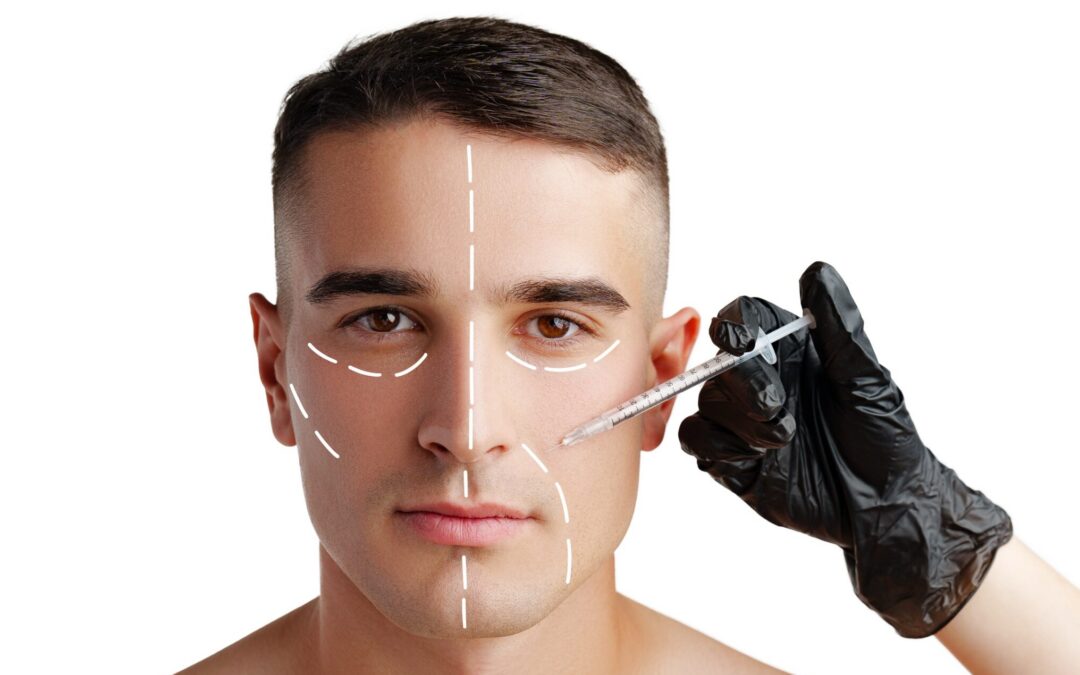
Someone you know is sucking in their cheeks at the table, running their hand along their jawline. They’re “mewing” — a facial exercise that’s supposed to chisel their face. Maybe a 23-year-old you know just spent $8,000 on jaw surgery even though nothing was medically wrong. Or maybe you’ve noticed the explosion of men’s skincare products suddenly everywhere.
This is looksmaxxing, and it went from the most narcissistic corner of the internet to a movement reshaping how an entire generation thinks about appearance. 68% of Gen Z men now use facial skincare, up from 42% just two years ago.
From Hammering Faces to Mainstream Grooming
The extreme end of looksmaxxing sounds like body horror. Young men break their legs surgically to gain extra inches of height. They “bonesmash” their faces with hammers to heighten their cheekbones. They inject steroids and testosterone to inflate their muscles, and some even smoke crystal meth to suppress their appetite and hollow out their cheeks.
The Atlantic describes the movement as narcissistic, cruel, racist, and proudly anti-compassion. The community’s newest star, 20-year-old Braden Peters (who goes by “Clavicular” online), was expelled from college and allegedly ran over someone with his Cybertruck on Christmas Eve while livestreaming. The incident only grew his following.
But looksmaxxing isn’t just about extremists anymore. It’s gone mainstream as optimization culture — and it’s changing how an entire generation of young men thinks about their appearance.
When a Plastic Surgeon Sees 400% More Young Men
Dr. Jennifer Levine, a plastic surgeon in New York, has seen a 400% increase in 20-something men seeking jawline treatments since 2020. “Having a square jaw is considered masculine,” she explained. “Think Patrick Bateman from American Psycho. Definition and angularity are the goals.”
The character from that 25-year-old movie has become a Gen Alpha role model. On Reddit and 4chan forums, looksmaxxers use Bateman’s face as their profile picture. Sample thread titles: “What can I do to be a Patrick Bateman sigma?” and “Patrick Bateman saved my life.”
Men’s grooming sales topped $7.1 billion in 2025. Sephora saw a 65% year-over-year increase in men’s tinted moisturizer sales. The share of U.S. men who say they never wear makeup dropped from 90% in 2019 to 75% in 2024.
Mogging, Mewing, and Math
The looksmaxxing worldview treats beauty as rigid mathematics with a single, knowable solution. Young men analyze their faces down to the millimeter, assigning numerical ratings to every feature. They believe attractiveness can be optimized through enough effort, money, and willingness to endure pain.
“Mogging” means aesthetically dominating someone else. “Mewing” involves flattening your tongue against your palate to supposedly move your jaw forward. Boys as young as 10 are doing this at the dinner table. Teenagers seek medical interventions to delay puberty so they can tweak physical changes like bone growth for as long as possible.
A Dalhousie University study analyzed more than 8,000 comments on looksmaxxing forums. Lead researcher Michael Halpin warns the sites cause serious harm to the mental and physical health of young men, making them feel like failures.
The Dark Side Got Darker
Looksmaxxing grew out of incel culture — involuntary celibates who blame women for their romantic failures. But according to sex neuroscientist Debra Soh, young men are projecting their own preferences onto women. Men tend to be more looks-focused when selecting partners, but women prioritize other qualities.
Research on mate preferences shows women care more about a man’s ability to protect and provide. Hypermasculinity is actually off-putting to most women because higher testosterone levels correlate with aggressiveness, high-risk behavior, and infidelity. The rectangular-prism-headed look these guys want isn’t what women find attractive.
So why the obsession? Soh argues looksmaxxing is a coping mechanism for young men who feel they have no control in a world that’s pushed them aside. As young men fall behind their female peers in educational and occupational attainment, physical appearance becomes the easier path to status and attention.
From Fringe to $85 Billion Industry
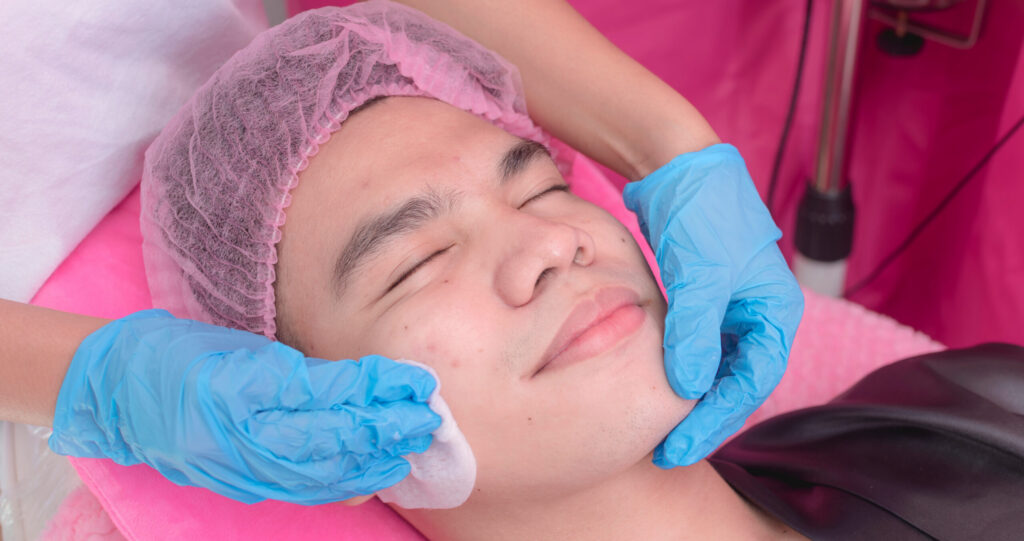
Mainstream looksmaxxing has folded into wellness culture. Young men now treat grooming the same way they treat fitness tracking, supplements, and longevity routines. Brands have reframed makeup as “maintenance, not vanity” to remove stigma.
Target partnered with online streaming collective AMP to launch TONE, a men’s cosmetics line. Dwayne “The Rock” Johnson launched Papatui skin care. Harry Styles and Brad Pitt have their own beauty brands. This isn’t niche anymore — it’s a market projected to surpass $85 billion by 2032.
The goal is “invisible efficacy” — improving appearance without announcing the effort. Gen Z men want to look “resilient” rather than “rugged,” prioritizing products that offer SPF, hydration, and repair in one step.
When Millimeters Become Everything
The extreme cases reveal something deeper: young men who see their bodies as the only thing they can control, optimizing their appearance as a substitute for purpose, connection, or meaning. That kid mewing at breakfast isn’t just copying TikTok. He’s absorbing a worldview that reduces human value to facial symmetry and treats self-worth as something you can measure in millimeters.
Whether you’re watching this happen to someone you know or recognizing pieces of it in yourself, looksmaxxing reveals a generation grappling with what masculinity means when traditional markers of success feel increasingly out of reach.