
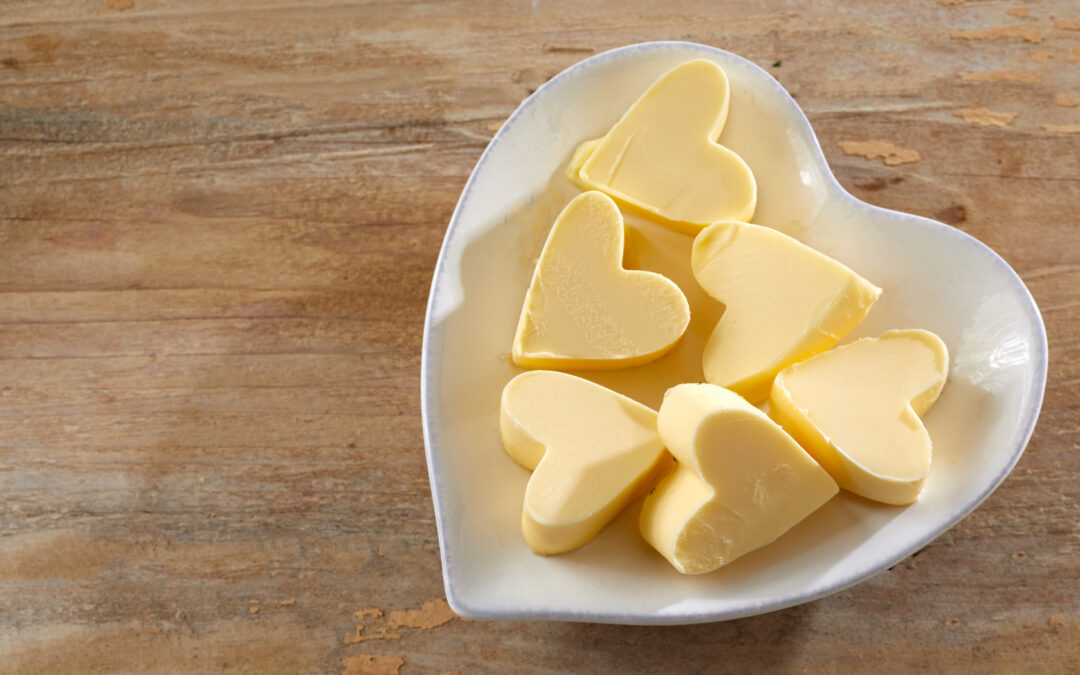
Consider the humble stick of butter. For most of the 20th century, it sat quietly in its foil wrapper doing exactly one job — making things taste better — without anyone making a particularly big deal about it. Then the 80s arrived, saturated fat became public enemy number one, and butter spent three decades as a dietary villain. We switched to margarine, we apologized for using it in recipes, we stocked our grocery carts with I Can’t Believe It’s Not Butter like people who couldn’t be trusted around the real thing.
Now butter is back. And it has gotten, by any reasonable measure, completely out of hand.
From Villain to Luxury Item
The rehabilitation of butter was a long time coming. The fat-phobia era of the 80s and 90s rested heavily on the presumed virtue of margarine — a highly processed product made from vegetable oils, loaded with trans fats that turned out to be considerably worse for cardiovascular health than the saturated fat they replaced. The FDA banned partially hydrogenated oils in 2015, and by 2018 manufacturers couldn’t use them at all. Without trans fats, margarine’s health halo evaporated. Butter, meanwhile, started looking like the simpler, more honest option — real ingredients, recognizable process, no industrial chemistry required.
But something else happened alongside the nutritional reversal. Butter didn’t just get rehabilitated. It got repositioned. What was once a grocery store staple sitting in a yellow box became, somewhere in the last few years, a status object.
The evidence accumulates quickly. Compound butters — blends folded with herbs, spices, truffle, miso, chili honey — are now sold in specialty bundles for $60 a set. Kerrygold, the Irish butter brand, flew a group of influencers to a five-star resort in County Cork for a “butter brand trip.” Quality Bistro in New York City charges $38 for its tableside Butter Cart — servers scoop cultured butter sourced from an upstate creamery onto a marble slab, smear it artfully, and finish it with French sea salt and Piment d’Espelette, served alongside toasted bread. The hashtag #ButterBoard has accumulated 180 million TikTok views. There are more than 1.6 million posts tagged simply #butter.
The Meme That Told the Truth

If you want a precise timestamp for the moment butter completed its transformation from ingredient to identity, it might be January 2025, when a satirical tweet racked up 2.7 million views in a matter of days.
“Trader joe’s frozen asile: Lemony garlicky miso gochujang brown butter gnocchi.”
The joke — and it was purely a joke, a fictional dish invented to mock a specific kind of food culture — spread because it was instantly recognizable to anyone who’d spent time in a certain corner of the food internet. It captured the tendency of upscale home cooking content to pile on prestigious-sounding ingredients until the recipe becomes a kind of class performance. The meme expanded for weeks: Park Slope kids asking for it for dinner, Gwyneth Paltrow in a kitchen, Rick Owens shoes for people who make it.
Then the New York Times cooking account actually made the dish. A Korean-American food columnist browned butter with gochujang, miso, lemon, and gnocchi, posted the video, and reported back that it tasted quite good. The joke had eaten itself — and produced a real recipe in the process.
Brown butter’s central role in that meme wasn’t incidental. Beurre noisette, the French technique of cooking butter until the milk solids toast to a nutty, caramel-adjacent depth, has become the defining culinary gesture of this particular cultural moment. It signals sophistication without requiring professional training. It transforms a simple dish into something that sounds deliberate.
Butter’s Weirder Experiments
Not every butter development of the current moment aspires to elegance. Some have lurched directly into absurdism.
An Oregon couple decided to test whether the vibration of a trail run could churn heavy cream into butter if carried in a backpack. It could. Their TikTok video generated 11 million Instagram views, spawning a minor running subculture. A grocery chain in Connecticut began dipping vanilla soft-serve cones in melted butter before serving them, describing the result as “addictive.” Butter dishes — the small, lidded ceramic objects your grandmother kept on the table — have become a Gen Z home decor obsession, with searches spiking on Pinterest and retailers releasing limited edition designs.
None of this is entirely disconnected. What runs through the absurdist experiments and the $38 tableside service and the miso gochujang meme is the same underlying current: butter has become the screen onto which a particular cultural anxiety about food, authenticity, indulgence, and class gets projected.
Why This Moment
The timing makes a certain sense. After years of food culture swinging between hyper-wellness restriction and maximalist excess, butter sits at an oddly comfortable middle. It’s indulgent without being processed. It’s real without being austere. It requires no explanation, no label scrutiny, no apology — at least not the way a protein bar or a seed oil does.
A 2026 survey by Challenge Butter found that 60% of Americans now prefer flexibility in how they eat, moving away from the rigid food rules that defined the previous two decades. Nearly a quarter said they no longer want to categorize foods as “good” or “bad.” If that’s the mood, butter is perfectly positioned: familiar, delicious, and finally, unapologetically itself.