
Something is quietly spreading through social media feeds that has nothing to do with productivity hacks or wellness influencers hawking supplements. People are boiling apples for gut health. Swapping iced lattes for hot water. Shuffling around the house in slippers. Cooking congee on Sunday mornings. Captioning it all: “Day one of becoming Chinese.”
The trend has a name — Chinamaxxing — and it’s one of the more genuinely interesting cultural moments of 2026.
K-pop Had Its Moment. Now It’s China’s Turn.
We’ve watched this pattern before. Japanese aesthetics — minimalism, soaking culture, the obsession with craft — permeated Western design and wellness spaces for years. Then K-dramas went global, K-pop became a genuine mainstream phenomenon, and K-beauty rewrote the American skincare aisle. Each wave reflected a shift in cultural credibility, a moment when a country stopped being seen primarily through a political lens and started being experienced through its food, music, aesthetics, and daily habits.
China, for a long time, seemed like an exception to that pattern. Now it doesn’t.
Labubu dolls are dangling from Dior bags at Paris Fashion Week. The Adidas Tang jacket — a nod to historic Chinese fashion — went viral almost overnight. Flights to China during Lunar New Year surged dramatically.
A Harvard researcher studying the history of science put it plainly: Chinese video games, films, and cultural exports are reshaping the imagination of what China actually is.
Hot Water, House Slippers, and 5,000 Years of Wellness Logic
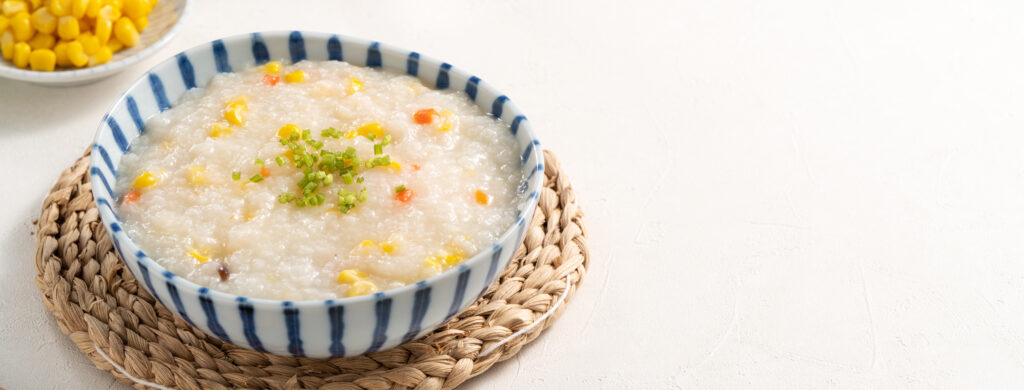
At the lifestyle level, Chinamaxxing revolves around a set of daily habits that practitioners of traditional Chinese medicine would find entirely unremarkable. Drinking warm water instead of cold beverages. Keeping feet warm. Eating warming, easily digestible foods like congee and broths rather than cold breakfast bowls. Doing morning movement practices — qigong, lymphatic exercises — rather than punishing early workouts.
These TCM-rooted practices have existed for millennia, but their sudden popularity in the West says something interesting about where people are looking for answers. As trust in conventional medicine has declined and biohacking culture has peaked, a growing number of people are drawn to systems that treat the body as something to be tended over time rather than optimized in the short term.
One wellness company that incorporates herbal medicine reported a 250% increase in organic social media impressions when the trend peaked in January — alongside a 40% week-over-week jump in web traffic. That’s not meme traffic. That’s people actually changing their pantries.
The Catalyst Nobody Predicted
The trend got a significant push from an unlikely source: the near-ban of TikTok. When the US government threatened to shut it down in early 2025, many American users migrated to Xiaohongshu — the Chinese platform also known as RedNote — as a form of protest and curiosity. What happened next was a collision of two populations who normally exist in entirely separate online spaces, suddenly talking directly to each other.
Americans saw apartments, street food, futuristic transit systems and ordinary daily life in Chinese cities. Chinese users saw Americans who were genuinely curious rather than hostile. Videos of Chongqing’s elevated rail lines threading through residential towers went viral not as propaganda but as something more simple: proof that a version of urban life most Americans have never experienced actually exists somewhere.
What It Reveals About Everything Else
Shaoyu Yuan, a professor of international relations at NYU, offered a straightforward read: when people stop trusting their own institutions and cultural reference points, they become more open to looking elsewhere. That’s not a political statement so much as a human one. Tianyu Fang, a doctoral researcher at Harvard, framed it even more directly — the trend tells us more about how Americans feel about America than how they feel about China.
Not everyone is enthusiastic. Some members of the Chinese diaspora have pointed out the uncomfortable irony of non-Asian creators enthusiastically adopting habits that were met with ridicule — or worse — during the pandemic. The habits being celebrated now as ancient wisdom are the same ones that made Chinese Americans targets of harassment just a few years ago. That tension is real and worth sitting with.
Slippers, Congee, and a Longer View
Chinamaxxing will almost certainly fade as a meme. The ironic framing — “becoming Chinese,” “Day one” — has the shelf life of any viral format. But the underlying currents that created it are less likely to disappear: the global growth of the traditional Chinese medicine market, now estimated at $282 billion; China’s expanding presence in fashion, gaming, and consumer tech; and a younger generation that’s increasingly comfortable building its cultural menu from anywhere, regardless of geopolitical complications.
Whether you’re sipping hot water or firmly committed to your iced coffee, it’s worth knowing the trend exists — because the cultural shift underneath it is already well underway.