

When 22-year-old Jesse Brodka explains why she practices tarot alongside her Catholic faith, she doesn’t sound like someone rejecting religion. She sounds like someone craving ownership. “There is such little ownership over a religious belief system that you’re just told all the right answers to,” she told researchers. “These other spiritual ways have a more personal connection.”
Welcome to the great spiritual unbundling of Gen Z, where 51% of young people now practice tarot or fortune telling, #WitchTok has racked up over 45 billion views, and the question isn’t whether your daughter believes in crystals — it’s which ones she keeps in her pocket.
The Numbers Tell the Story
The statistics are startling if you’ve been paying attention to church attendance. Over one-third of Gen Z identifies as religiously unaffiliated, the highest rate of any generation in American history. Yet paradoxically, 77% still consider themselves spiritual, and they’re spending real money to prove it.
The psychic services industry now generates over $2 billion annually in the U.S. alone. Sales of spell kits on Etsy targeting the 18-25 demographic have increased by 200%. You can find over 400,000 products tagged “witch” on the platform — everything from hand-poured intention candles to custom tarot readings promising insight into your future love life.
This isn’t fringe behavior. Nearly 20% of Gen Z purchased a spiritual item like candles, crystals, or sage in the last six months for ritual use. The global spiritual products market, valued at $186 billion in 2025, is projected to hit $255 billion by 2033.
What They’re Really Searching For
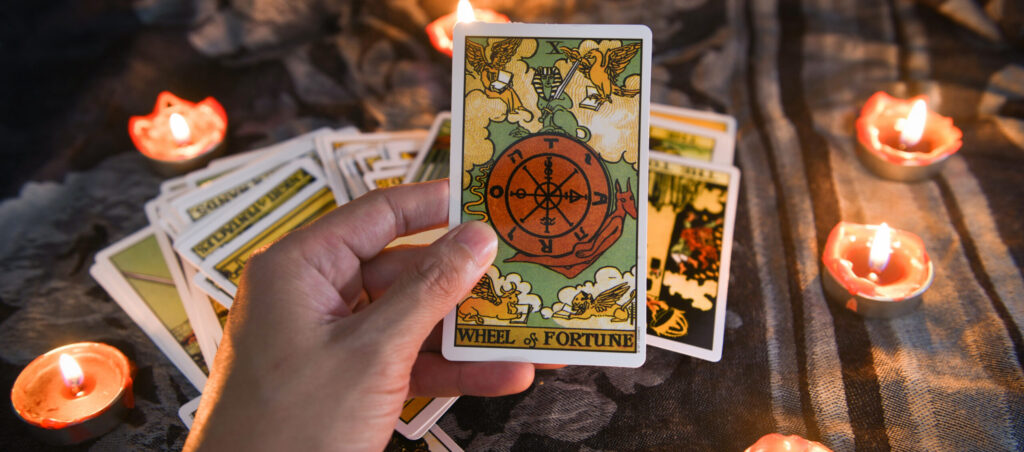
If you’re tempted to dismiss this as silly internet trends, you’re missing what’s actually happening. Gen Z didn’t wake up one day and decide organized religion was bad. They grew up watching institutions fail them repeatedly — financial crashes, political dysfunction, climate anxiety, a pandemic that closed their schools and isolated them for years.
Traditional religious structures promised community, meaning, and moral clarity. For many young people, those structures also came packaged with rigid hierarchies, political baggage they didn’t sign up for, and teachings that conflicted with their values around gender, sexuality, and social justice.
“Christianity has a really bad PR problem,” explains Liz Bucar, a religion professor at Northeastern University. “There’s a range of ways to be Christian. There are queer-friendly Christian congregations. But that’s not what people associate with Christianity. They associate the loudest voices with it.”
Enter witchcraft — or more accurately, what Gen Z calls witchcraft. Modern practice looks less like casting hexes and more like setting intentions through meditation, keeping crystals for “good energy,” journaling with tarot cards for self-reflection, or creating vision boards as manifestation rituals.
The Feminist Reclamation
There’s also something deeper at play here. Many young women practicing witchcraft explicitly frame it as feminist reclamation — taking back power from patriarchal religious institutions that historically persecuted women as witches when they stepped out of prescribed roles.
“Witchcraft is feminism, it’s inherently political,” writes Gabriela Herstik, author of Inner Witch. “It’s always been about the outsider, about the woman who doesn’t do what the church or patriarchy wants.”
Kelly Jarwin, who’s practiced as a solitary witch for 15 years, puts it plainly: “For many years women have been seen as the lesser sex and to be able to reclaim our power is feminist. I guess the word ‘witch’ stirs up fear of women being powerful.”
The timing isn’t coincidental. Gen Z women are coming of age in an era of backsliding reproductive rights and renewed debates over bodily autonomy. Only 40% of Gen Z feel they have control over their future, yet 77% identify as spiritual. Witchcraft offers a sense of agency — the belief that you can influence outcomes through ritual, intention, and personal power rather than institutional gatekeepers.
The TikTok Effect
Social media transformed how spiritual practices spread. Previous generations might have needed in-person mentors or elusive books to learn tarot or herbalism. Gen Z has YouTube tutorials, TikTok communities, and Instagram witches sharing knowledge freely. These digital spaces function as virtual covens, creating community without geographic limitations or institutional barriers.
This democratization comes with complications. Critics worry about cultural appropriation when practices get commodified and stripped from their origins. There’s also the superficiality problem — when spiritual practice becomes more about aesthetic than actual belief, more about collecting pretty crystals than engaging with deeper meaning.
What This Means for the Rest of Us
If you’re raising teenagers or watching younger relatives embrace these practices, the instinct might be concern or dismissal. But try reframing it: Gen Z isn’t abandoning spirituality. They’re just redesigning it to fit values of autonomy, inclusivity, and personalization — the same values shaping how they approach work, relationships, and identity.
Whether you think tarot works or crystals have power misses the point entirely. The real story is about a generation creating spiritual systems that feel responsive to their needs rather than inherited structures that don’t. They’re seeking meaning in a chaotic world, just like every generation before them. They’ve just decided the old containers don’t fit anymore.
And they’re willing to pay for alternatives — one Etsy spell at a time.