
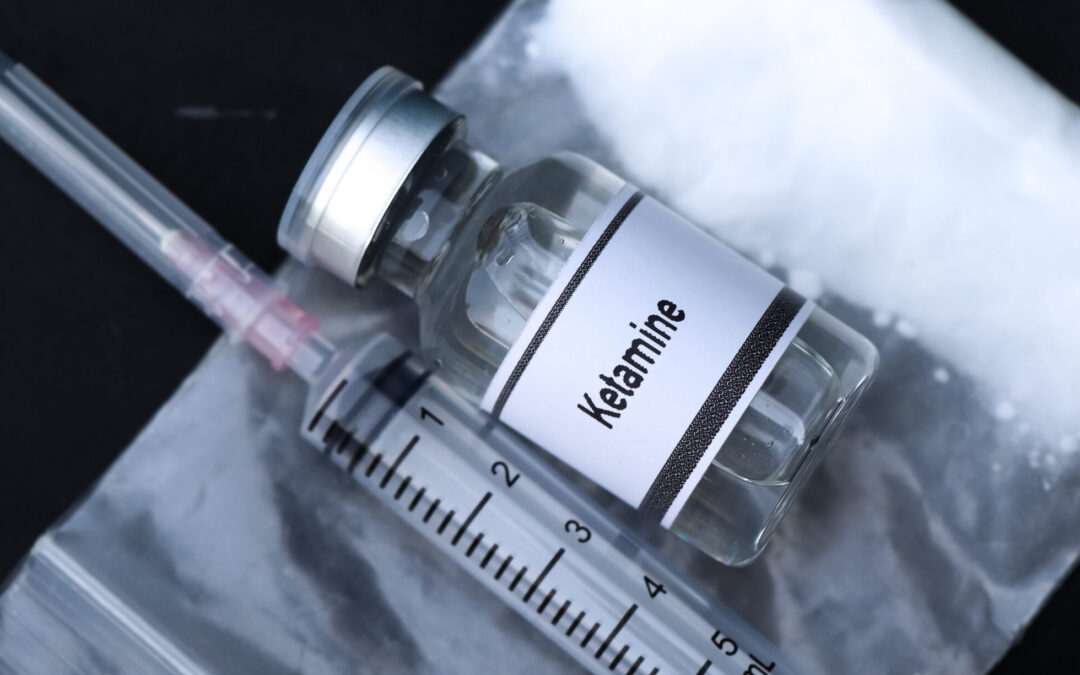
Ketamine has always had a reputation problem. Party drug. Anesthetic. Fast-acting antidepressant that works when almost nothing else does. For years, psychiatrists have prescribed it for depression with a kind of reverent uncertainty — they knew it worked, they just couldn’t fully explain why.
A study published this month in Molecular Psychiatry is the closest science has come to answering that question, and the results are visible in a way that hasn’t been possible before: in images of the living human brain, mid-transformation.
When Standard Antidepressants Hit a Wall
Major depressive disorder affects hundreds of millions of people worldwide, but the story gets significantly harder for a substantial subset. About 30% of depression diagnoses eventually become treatment-resistant depression (TRD) — a condition where symptoms persist despite adequate trials of multiple standard antidepressants. These are the people for whom months of trying SSRIs and SNRIs produce nothing meaningful. Ketamine emerged as a lifeline for this group roughly two decades ago, delivering relief within hours rather than weeks. But the molecular mechanism behind that speed remained, frustratingly, theoretical.
A Drug That Rebuilds What Depression Damages
Depression doesn’t just alter mood. It disrupts the physical architecture of the brain, weakening connections between neurons and impairing their ability to communicate. Ketamine appears to reverse this damage at a cellular level — stimulating the formation of new synaptic connections far faster than any conventional antidepressant. The drug works by blocking a receptor called NMDA, part of the brain’s glutamate system. This triggers a surge of glutamate — the brain’s primary excitatory neurotransmitter — which then activates a separate set of receptors called AMPA receptors. It’s those AMPA receptors that appear to drive ketamine’s rapid antidepressant effect, and for the first time, researchers have watched it happen in real time.
A PET Tracer Built for One Question
The problem with previous research was that nobody had ever directly observed this process in a living human brain. Animal studies pointed toward AMPA receptors. Indirect MRI imaging offered hints. But the mechanism stayed unproven in humans. A team at Yokohama City University changed that by developing a specialized PET tracer — a radioactive compound that binds specifically to AMPA receptors, rendering them visible during brain imaging. Using this tool, they tracked AMPA receptor changes across the living brain in 34 patients with treatment-resistant depression and 49 healthy controls. Brain scans were performed before and after two weeks of ketamine infusions or placebo. The changes that appeared were not subtle.
The Habenula and the Reward Circuit
The rewiring didn’t happen uniformly. AMPA receptor density increased in several cortical regions — areas governing thought integration, emotional processing, and perception. But it dropped sharply in one specific structure: the habenula, a small region tied to reward processing and strongly associated with anhedonia — the inability to feel pleasure or motivation that makes depression so difficult to endure. That simultaneous increase and decrease, varying by brain region and correlating directly with each patient’s symptom improvement, suggests ketamine isn’t simply altering brain chemistry. It’s reorganizing the brain — selectively, and fast.
From Mysterious Infusion to Personalized Care
The findings carry implications well beyond explaining a mechanism. If PET imaging can reliably track AMPA receptor changes in the brains of patients receiving ketamine, it could eventually serve as a biomarker — a biological signal that predicts, before treatment begins, whether a particular person is likely to respond. That shift would be significant in psychiatric care, which still relies heavily on symptom-based diagnosis and clinical trial and error. Ketamine-derived treatments — including esketamine nasal spray for TRD — are already FDA-cleared and proliferating in clinics across the country. Understanding precisely how they work opens a path to refining them further and, eventually, to designing new compounds that replicate ketamine’s speed without its limitations.
For the roughly 280 million people worldwide living with depression, the ability to see a brain change in real time isn’t just a scientific milestone — it’s a map of what recovery actually looks like at the cellular level. The mechanism is no longer a black box. It’s on screen, region by region, receptor by receptor, visible for the first time in a living human brain.