
In March, a Los Angeles jury found Meta and Google liable for designing their platforms to addict young users — awarding $6 million in damages to a 20-year-old plaintiff who alleged that Instagram and YouTube contributed to severe depression and suicidal ideation beginning in her childhood. The companies are appealing. But the verdict opened a much larger question that the courtroom couldn’t fully answer: how, exactly, does an app do that? What specific design choices transform a communication tool into something that keeps people — especially children — trapped inside it for hours at a stretch?
The answer has been sitting in academic research for over a decade. And it starts, surprisingly, in Las Vegas.
15 Years in the Casino
Natasha Dow Schüll is a cultural anthropologist at New York University who spent 15 years inside the gambling industry — interviewing slot machine designers, mathematicians, software engineers, and executives, as well as the people who couldn’t stop playing. Her 2012 book, Addiction by Design, documented the deliberate engineering of what gamblers themselves call the “machine zone”: a dissociative, trancelike state in which time dissolves, social awareness fades, and the only thing that exists is the next pull of the lever.
The machine zone wasn’t an accident. It was a product goal. Casino companies had figured out that the most profitable gamblers weren’t chasing jackpots — they were chasing the zone itself, a state of frictionless absorption that let them play for 24 or 48 hours straight. Some, Schüll documented, wore adult diapers to avoid having to leave the machine. The industry optimized for this state deliberately, iterating on every variable — speed, sound, ergonomics, reward timing — to produce it as reliably as possible.
What Schüll didn’t expect was that her findings would become a blueprint for something else entirely.
Four Features. One Recipe.
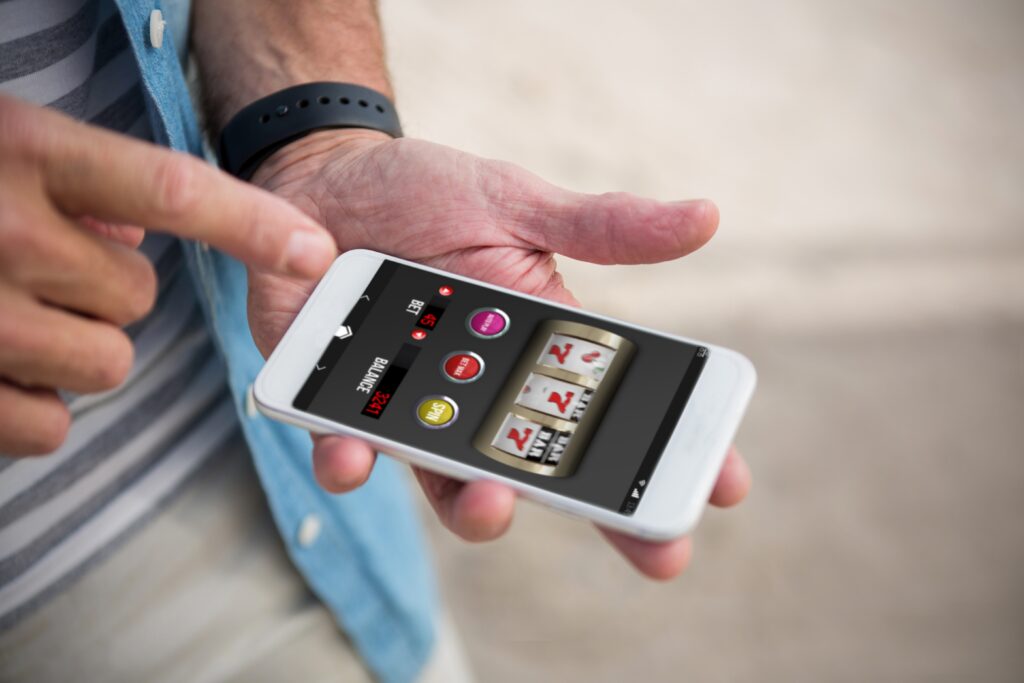
Around 2010, Schüll began noticing the same design elements appearing on smartphone apps — social media platforms, games, video streaming services. The features that slot machine engineers had spent decades refining to keep gamblers in the zone were showing up, almost identically, in the products children were using every day.
She identified four that, when combined, create what she now calls the “superglue” effect:
Solitude is the first. When the interaction is just between a person and a screen — no one watching, no social feedback to signal that it’s time to stop — the natural cues for disengagement disappear. Research has consistently found that children who use screens alone in their bedrooms have significantly higher rates of what psychologists term “problematic usage” — continuing to use an app even when it’s clearly damaging their sleep, friendships, or health.
Bottomlessness is the second. There is no end to TikTok. There is no end to Instagram. No natural stopping point means no sense of completion, no moment of satisfaction that signals it’s time to leave. “There’s no natural stopping point,” Schüll told NPR. “So you never feel finished or satisfied.” The infinite scroll — invented by a designer who now actively campaigns against it — is the architectural embodiment of this principle.
Speed is the third. The faster the feedback loop, the more completely the user merges with the device. Schüll’s casino research had documented this in slot machines: faster play produced longer sessions. The same dynamic operates on social media. Higher-speed internet, autoplay video, and instantaneous content loading have steadily compressed the time between scrolls, making it harder to surface from the flow state the app is engineered to produce.
Teasing — giving users almost what they want, but never quite — is the fourth and most psychologically sophisticated feature. Jonathan D. Morrow, a neuroscientist and psychiatrist at the University of Michigan, describes the mechanism precisely: the algorithm identifies what a user is seeking, then withholds it — offering something adjacent, something close, something that generates the feeling that the desired thing is just one more scroll away. “There’s always a possibility you’ll finally get what you want,” Morrow says. That possibility is more addictive than delivery.
Why Children Are Uniquely Exposed
Each of these features exploits tendencies that are normal and healthy in adult psychology but are exaggerated in children. Solitude removes the social scaffolding that helps adults regulate behavior. Bottomlessness defeats developing impulse control. Speed overwhelms an executive function system that won’t fully mature until the mid-twenties. Teasing hooks a reward-seeking drive that is neurologically more intense in adolescence than at any other point in life.
“These are not normal products for kids like a pair of shoes or a toy,” Schüll told NPR. “They create a relationship with kids.” The verdict against Meta and Google drew explicit comparisons to the Big Tobacco litigation of the 1990s — a reference to the pattern of an industry that knew its product caused harm, that optimized for engagement over user welfare, and that eventually faced legal accountability for the distance between those two things.
What the Four Features Let You Do

Schüll now gives her NYU students a practical exercise: take any app, rate it against the four features, and assess how harmful its design is. The framework functions as a consumer rubric as much as an academic one. An app that scores high on solitude, bottomlessness, speed, and teasing is, by design, engineered for overuse. That’s not an accident of interface aesthetics — it’s the goal the interface was built to achieve.
The design choices that juries are now scrutinizing — infinite scroll, autoplay, algorithmic teasing, push notifications timed to re-engage lapsing users — were not engineering mistakes. They were solutions to a problem the casino industry had already solved. Understanding them as such is the first step toward evaluating them honestly.