
The researcher wasn’t looking for this. Matthias Mehl, a psychology professor at the University of Arizona, was replicating a 2007 paper on gender differences in talkativeness when his collaborator came back with an average of 12,700 spoken words per day. The 2007 estimate had been 15,900. He told her there had to be a mistake. She rechecked everything. The number held.
What they’d stumbled onto, entirely by accident, was one of the most consistent trends in communication research in recent memory: Americans are speaking less — measurably, steadily, across every age group — and have been for at least fifteen years.
338 Words a Year, Every Year
The new study, published in Perspectives on Psychological Science, drew on 22 studies conducted between 2005 and 2019, involving about 2,200 participants. None were designed to track talkativeness — they were studying cancer coping, divorce adjustment, meditation. Participants had no idea their word counts would be analyzed this way, which rules out behavioral adjustment as an explanation.
Every year between 2005 and 2019, daily spoken words dropped by 338 — from around 16,000 to 12,700. That’s more than 120,000 fewer spoken words per year. Extrapolate to 2026 and we may be speaking fewer than 10,000 words a day to other humans.
The decline predates COVID. It predates the smartphone era. It was already well underway before the conditions people tend to blame actually materialized.
The Small Conversations That Disappeared

Mehl is specific about what’s driving it — not dramatic social withdrawal, but the erosion of incidental conversation. The small exchanges that used to be unavoidable: asking a cashier for help, getting directions from a stranger, chatting briefly with a neighbor, ordering from a server. One by one, these micro-conversations have been automated away. Self-checkout. GPS. App ordering. Touchscreen kiosks. Remote work eliminating the water-cooler exchange.
“All of these ancillary conversations that we have — talking to a barista when you order a coffee, instead you’re now using your app,” said Pfeifer. “You’re no longer asking for directions, you’re opening Google Maps. All the small conversations we’ve lost over time are going to make a big difference long term, because that’s the training ground for having larger and more important conversations.”
The framing here is important. It’s not that people suddenly stopped wanting to talk. It’s that the infrastructure that used to force small talk into daily life — the friction of needing to interact to accomplish ordinary things — has been progressively removed.
Younger Adults Are Losing the Most
When the researchers broke the data down by age, those under 25 lost about 452 spoken words per year compared to 314 for older adults. The Wall Street Journal noted an additional finding: mothers are now speaking roughly 16% fewer words to infants — a detail with real developmental implications, since language acquisition depends heavily on verbal input in early life.
The age pattern is counterintuitive. Younger people might be expected to have simply substituted written for spoken communication without net loss. But older adults — who didn’t grow up digital — are also declining, pointing to something systemic rather than generational.
What Spoken Words Actually Do
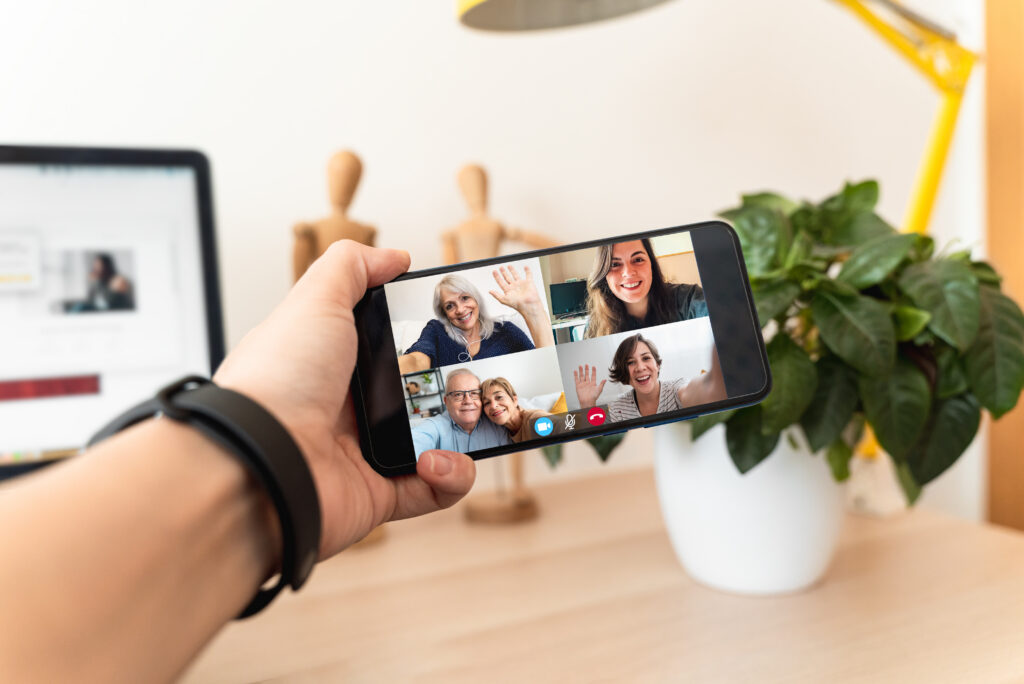
The researchers are careful about not overclaiming, but spoken conversation carries something text-based communication often doesn’t — tone, spontaneity, the physical presence of another person responding in real time. Whether total communication output across all channels has declined is a separate question. The issue is whether what remains is equivalent.
Research on social connection and health consistently finds face-to-face interaction is a stronger predictor of wellbeing than digital communication volume. Loneliness appears driven more by the absence of real-time, embodied connection than by the absence of contact in general. Texting more doesn’t seem to resolve it.
A Low-Tech Fix for a Structural Problem
Valerie Fridland, a linguistics professor at the University of Nevada, Reno, told the Wall Street Journal there’s no reason to panic. Small changes can help: parents talking more to infants, calling instead of texting when either would work, putting the phone down during routine errands.
Pfeifer’s prescription is even simpler: speak to one more person each day and strike up conversations even when they’re not necessary. That’s deliberately modest — not a social overhaul, but a deliberate reintroduction of the friction that used to happen automatically. The conversation with the cashier the app replaced. The question to a stranger that GPS made unnecessary. The three-minute exchange that wasn’t required but happened anyway.