
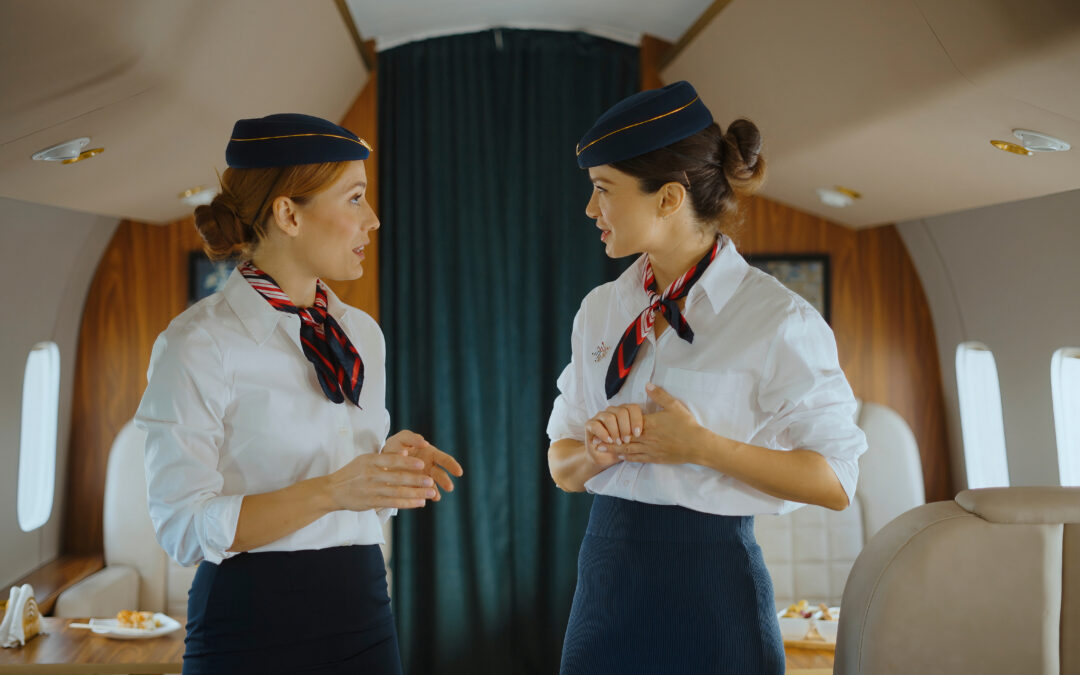
If you’ve ever noticed two flight attendants exchange a look over your head and wondered what it meant, there’s a decent chance it meant something specific. Cabin crews have developed a parallel vocabulary over decades — a shorthand for communicating everything from seating disputes to medical emergencies to whether a passenger is worth slipping extra snacks to, all without alerting the person in question to what’s being discussed.
A Travel + Leisure report published this month surfaced a term that’s been circulating in aviation circles for years but recently reached wider attention: “Code Mermaid.” If you hear a crew member mention it, you’ll want to check how much space you’re taking up.
What a Mermaid Actually Is
A mermaid, in flight crew terminology, is a passenger who has spread themselves across multiple seats — legs extended into the aisle, bag occupying the adjacent seat, body arranged to silently communicate that no one should sit nearby. It’s described by pilot and Amalfi Jets CEO Kolin Jones as essentially a seat-claiming maneuver: informal, not sanctioned, and particularly common on half-empty flights where unclaimed seats invite opportunism.
The name is more visual than it might initially seem. A passenger sprawled across three seats, legs together and extended sideways, does bear a passing resemblance to the silhouette. It’s passive-aggressive, the crew is aware of it, and they have a word for it. That word is not a compliment.
Gate Lice, Spinners, and Runners
Code Mermaid is the newest entry in a much longer glossary. Flight crews have names for nearly every category of passenger behavior that makes their job harder, and most of the terms are considerably less flattering than the passengers themselves would prefer.
“Gate Lice” are the people who cluster around the boarding gate well before their group is called, blocking the path for everyone else, creating the illusion of urgency that makes boarding take longer for everybody. Every frequent flyer has stood behind them. Every flight attendant has a name for them.
A “Spinner” is a passenger who boards without a seat assignment and stands in the middle of the aisle turning slowly, unable to locate their row, blocking all movement in both directions while 180 people wait behind them. A “Runner” is the passenger sprinting through the terminal to catch a connecting flight, occasionally making it, occasionally becoming someone else’s problem.
“Code 300” or “Angel” signals something far more serious: a passenger who has died during the flight. It’s one of a cluster of codes designed to allow crew members to communicate critical information — INAD for an inadmissible passenger, DEPU for a deportee traveling unescorted, DEPA for one under escort — without causing alarm among the surrounding passengers who might overhear and misinterpret.
The Codes That Have Nothing to Do With Safety
The lighter end of the vocabulary is where things get genuinely entertaining. “BOB” — Best on Board — is the crew’s informal designation for the most attractive passenger on the flight. According to flight attendants who have spoken to various outlets, a BOB sighting typically triggers a rapid relay through the galley: location confirmed, extra attentiveness authorized, freebies possible. Phone numbers have, apparently, been written on napkins.
“Cheerio,” said to a passenger as they deplane, functions as a signal — to other crew members in earshot — that the departing passenger is worth noticing. If you’ve ever left a flight feeling like the goodbye was slightly warmer than standard, there may have been subtext.
Why the Language Exists
The practical logic behind crew codes is straightforward. A cabin at 35,000 feet with 300 passengers is an environment where communication needs to be fast, clear, and invisible to the people it concerns. Codes allow a crew member to flag a medical situation, a problem passenger, or a seating dispute to colleagues without broadcasting the issue to everyone within earshot.
The social codes — BOB, Gate Lice, Mermaid — serve a different function: they’re the coping mechanism. Flight attendants manage an extraordinary volume of human behavior over the course of a single shift. Having names for the recurring characters, and being able to deploy those names knowing your colleagues will immediately understand, is the kind of small solidarity that makes a difficult job sustainable.
The next time you board a flight and hear something that doesn’t quite make sense, it’s worth a moment’s reflection. The crew has a word for what you’re doing. They have a word for almost everything.