
An eight-year-old girl noticed her recently laid-off father spending hours every day staring at his phone. She watched him scroll LinkedIn the way other people doom-scroll the news. She called it “doomjobbing.”
Her father, Ilya Bagrak, posted about it on Threads in late March. “I got laid off two weeks ago. My 8 yo daughter saw me spending a lot of time in the LinkedIn app, and she called it ‘doomjobbing’. That’s it. That’s the message.” The post racked up over 64,700 views. The comments filled immediately with people saying they recognized exactly what she’d described.
A child had found the word for something millions of adults were doing but hadn’t named: compulsively scrolling job listings not because it was productive, but because stopping felt worse than continuing.
Anxiety Wearing the Costume of Strategy
Eric Kingsley, a partner at an employment law firm who spoke to Newsweek about the viral post, put it plainly: “It is not strategy; it is anxiety in disguise.”
The distinction is important and easy to miss. Doomjobbing feels like working. You’re monitoring the market. You’re staying informed. You’re not giving up. Every hour on LinkedIn seems justifiable because job searching is supposed to be a full-time effort. But the compulsive version — the hours of scrolling that produce no applications, no outreach, no movement — isn’t job searching. It’s the illusion of agency in a situation that feels out of control, which is psychologically almost identical to doomscrolling the news. The activity doesn’t reduce the anxiety. It feeds it.
What makes this harder to recognize is that the behavior is structurally rewarded. LinkedIn is designed with the same infinite scroll mechanics as every other platform engineered to maximize time-on-app. New job postings refresh constantly. Notifications arrive. There is always more to check. The platform’s logic and anxiety’s logic point in exactly the same direction: keep going, there might be something better just below.
The Market That Made This Worse
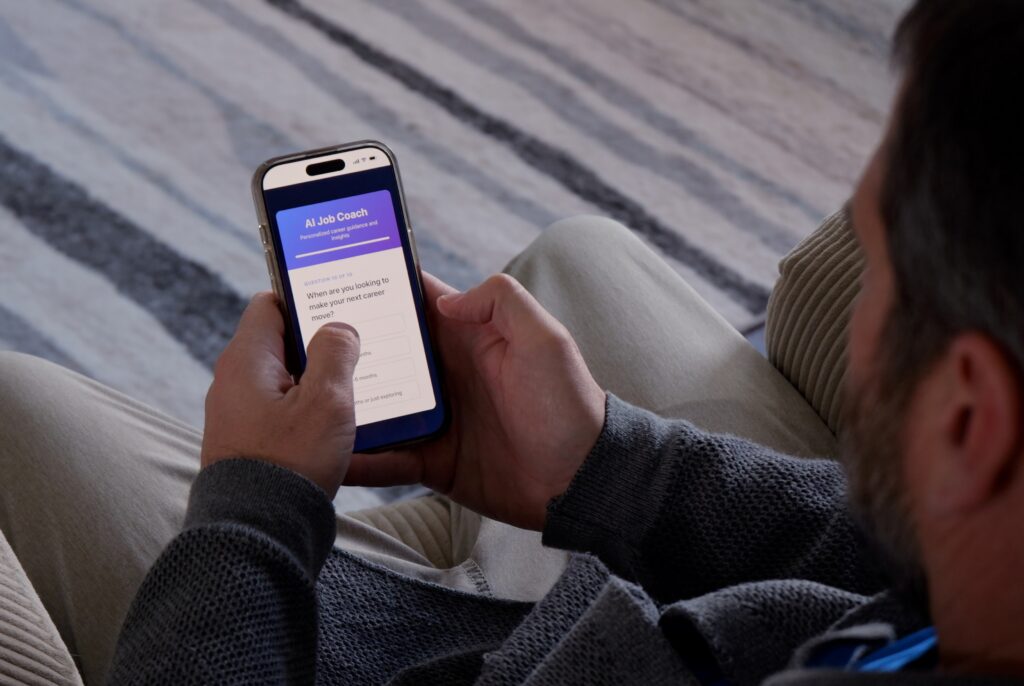
Doomjobbing didn’t emerge in a vacuum. The 2026 job market has a specific structural character that makes compulsive searching feel rational even when it isn’t.
Economists and Federal Reserve Chair Jerome Powell have described the current environment as a “low-hire, low-fire” market: companies aren’t cutting aggressively, but they’re also barely hiring. Productivity gains from AI adoption have allowed businesses to do more with existing headcount, reducing the pressure to bring new people on. Applications per job opening have more than doubled since 2022, according to LinkedIn’s own data — but that flood of applications hasn’t translated into more interviews or faster hiring. It’s produced the opposite: tighter AI-powered screening filters, more ghosting, longer decision cycles, and a cohort of job seekers who feel invisible despite applying everywhere.
80% of professionals say they feel unprepared for the 2026 job search, according to LinkedIn research — a figure that is remarkable given that applications have never been higher. More effort, less confidence. The paradox is structural: the easier it becomes to apply, the more applications flood every opening, the harder it is for any individual application to land, and the more anxious the job seeker becomes. Each additional application offers the feeling of doing something. None of them reliably produces a result. This is the loop.
Ghost Jobs and the Scroll That Never Ends
Compounding all of this is the proliferation of ghost jobs — listings for positions that don’t exist or have already been filled, posted to maintain pipelines or satisfy HR requirements. There’s no reliable way to identify them from the outside. Even a disciplined search produces long stretches of silence indistinguishable from being ignored, which loops directly back into more scrolling. The combination of a frozen market, infinitely scrolling platforms, and the psychological need to feel like you’re doing something has created a feedback cycle that’s genuinely difficult to exit. The search becomes the coping mechanism. The coping mechanism doesn’t work. The not-working produces more searching.
What Actually Works

Kingsley’s prescription is blunt: treat the search like a job with defined hours, not a 24-hour emergency. Two to three focused hours daily, then the app closes. The research supports narrow over wide — personalized outreach to specific hiring managers consistently outperforms mass application strategies. Volume feels productive. It mostly isn’t.
The irony of doomjobbing is that the behavior most likely to produce results looks and feels like doing less. In a market that rewards patience with silence, the hardest thing is closing the app.