
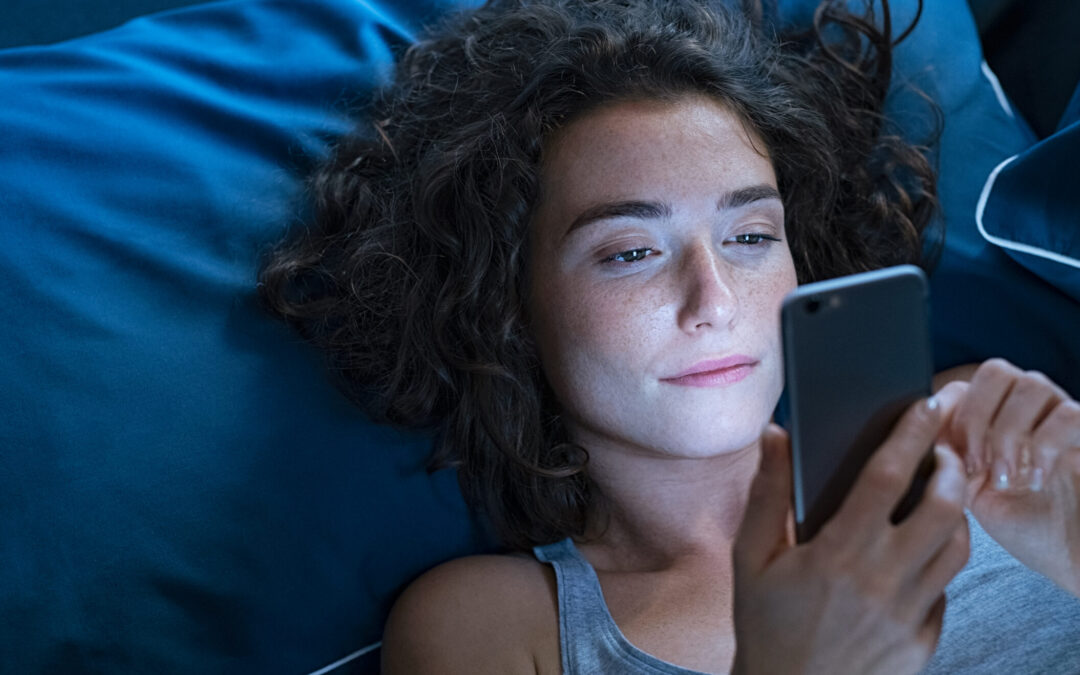
For the better part of a decade, a simple narrative has governed how millions of people think about sleep and screens: the blue light from your phone suppresses melatonin, tricks your brain into thinking it’s daytime, and delays your sleep. The solution, delivered via countless sleep articles, doctor recommendations, and the Night Shift and Night Mode settings built into every major smartphone, has been equally simple: filter out the blue light before bed.
New research suggests this is mostly wrong — and the actual problem is considerably more interesting.
Where the Blue Light Theory Came From
The blue light story isn’t fabricated. There’s a real biological mechanism behind it. Human eyes contain specialized cells with a light-sensitive protein called melanopsin, which helps regulate the body’s circadian clock. That system uses light — particularly blue wavelengths — to determine when to feel awake or tired. Early studies showed that blue light could meaningfully suppress melatonin and delay sleep onset.
The problem, as researchers now understand it, is that most of those early studies were conducted under artificially dim conditions. Participants spent the day in low-light lab environments, then were exposed to bright blue light at night. Under those conditions, the contrast was dramatic and the effect was real.
That’s not how anyone actually lives.
What the Numbers Actually Show
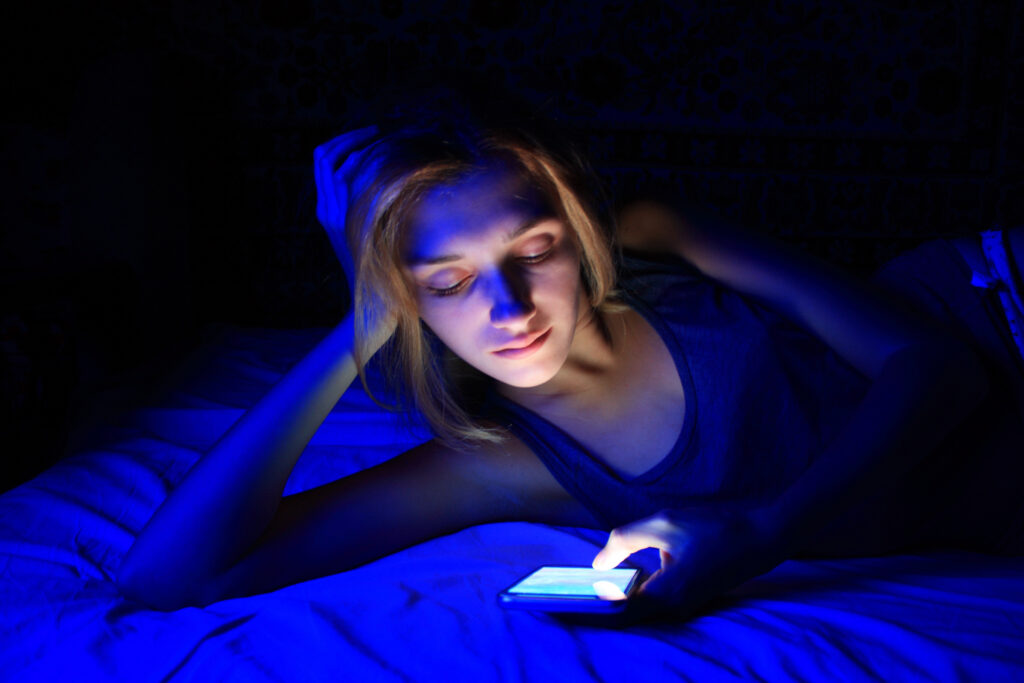
A review of 73 independent studies involving over 113,000 participants found that using a bright screen before bed delayed sleep onset by an average of 2.7 minutes. A separate analysis of 11 blue light-specific studies found the maximum effect was around nine minutes. Not zero — but not the sleep-destroying force it’s been made out to be.
Jamie Zeitzer, a professor of psychiatry and behavioral sciences at Stanford, put it bluntly when speaking to the BBC: “The amount of light emitted from our screens is really inconsequential.” The original research wasn’t wrong, he explained, but the way it was interpreted and applied to real-world phone use was. What screens produce just isn’t bright enough to meaningfully override a properly calibrated circadian rhythm.
The phone’s Night Mode filter, then, is largely theatrical — a reassuring switch that costs nothing and does very little.
The Actual Culprit
If blue light from screens isn’t the main problem, what is? Researchers point to two things. The first is total light exposure throughout the day. What your brain’s circadian system actually responds to is contrast — specifically, the difference between how much light you get in the morning and afternoon versus how little you get in the evening. When that contrast is high, your body’s sleep-wake signal is clear. When it’s low — as it tends to be for anyone who spends the day indoors, under the relatively dim lighting of a home or office — the signal gets muddy, and evening screen light can push it further in the wrong direction.
The second is content. What you do on the device matters more than the light it emits. Scrolling through stressful news, responding to work emails, or engaging with anxiety-producing social media activates your brain’s alert systems in ways that have nothing to do with wavelengths. “It is much more the content, rather than the light, that is keeping people awake,” Zeitzer told the BBC.
The Fix Is Simpler Than Night Mode
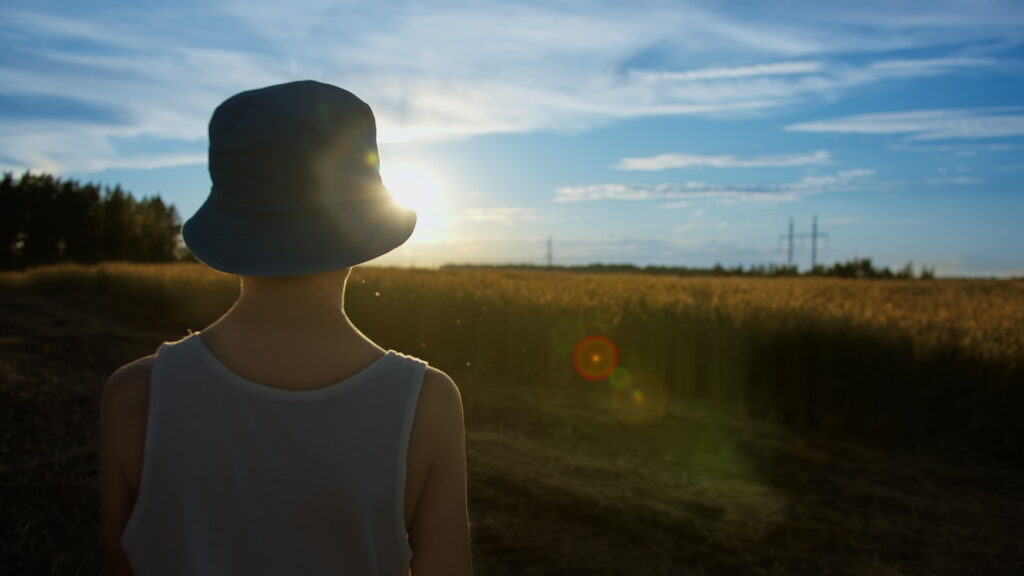
The evidence-based answer is a bit anticlimactic in its simplicity: go outside in the morning. A 15-minute walk in natural light — which is dramatically brighter than indoor lighting even on an overcast day — gives your circadian system the strong morning signal it needs to create a clean contrast by evening. Doing the same around 3 or 4 in the afternoon compounds the effect.
That high daytime light exposure means that the relatively dim glow of a phone screen before bed has almost no capacity to override the signal your eyes have already received. The science on this is, as researchers describe it, very clear.
The night mode filter on your phone was built on a real insight about light and sleep, applied to a context where it doesn’t really apply. You can leave it on — it’s not hurting anything — but if sleep is the goal, the 15 minutes you spend outside tomorrow morning will do more than all the amber-tinted screens in the world.