
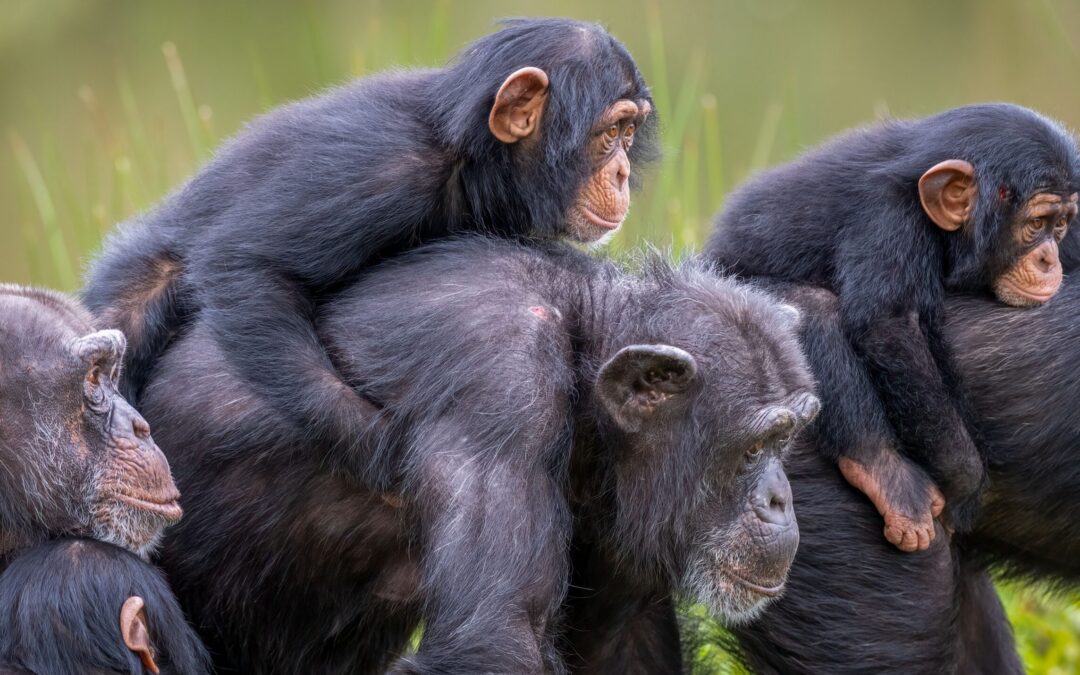
In the summer of 2015, primatologist Aaron Sandel was observing chimpanzees in Uganda’s Kibale National Park when something happened that his colleague — a behavioral ecologist who had studied chimps for two decades — had never seen before. A party from the Western cluster of the Ngogo community approached a group from the Central cluster. Normally, they would mingle, then split. This time, the Western chimps went silent when they heard the others approaching. Then they ran.
The Central group gave chase.
“Nothing like that had been observed before,” Sandel said. What followed, over the next nine years, would become the first definitively documented chimpanzee civil war in history — and the findings, published this week in the journal Science, carry implications that extend well beyond primatology.
The World’s Largest Chimp Community, Fracturing
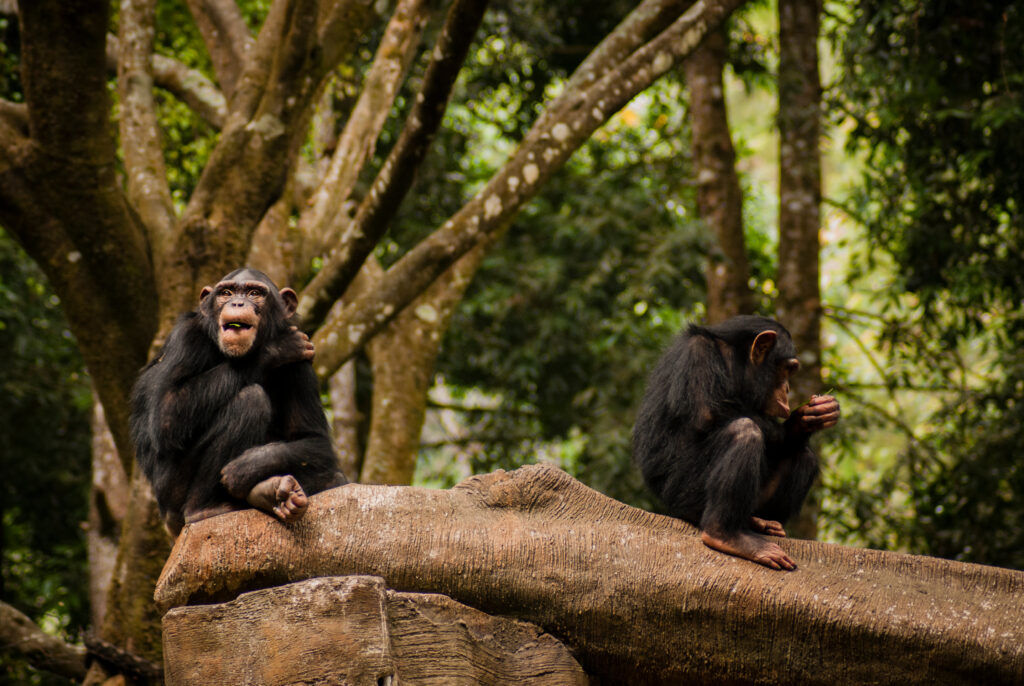
The Ngogo chimpanzee community in Kibale National Park is the largest known group of chimpanzees in the world — approximately 200 individuals. For decades, researchers had tracked them closely, building one of the most comprehensive behavioral datasets in primatology: 30 years of continuous observation dating back to 1995.
Within the Ngogo community, social relationships had always clustered around two groups — the Central and Western clusters. Individuals moved between them, mated across them, and formed the kind of cross-cluster ties that held the community together as a single unit. Until 2015, when those ties began to fray.
By 2017, the two clusters had separated geographically into entirely distinct territories. By 2018, the conflict turned lethal. Between 2018 and 2024, Western adults killed seven males and 17 infants from the Central group. An additional 14 adult and adolescent males from the Central group disappeared during the same period — their bodies never recovered, no signs of illness preceding their absence. Researchers believe at least some were also killed. More attacks have been documented since the study’s formal data period ended.
Scientists estimate that chimpanzee communities split, on average, every 500 years. This is only the second time researchers have ever witnessed one — and the first time it can be called definitively natural, without any interference from human provisioning or feeding that complicated interpretation of the earlier case.
Why It Happened
The fracture, Sandel’s team argues, was social rather than territorial. The Ngogo community had grown unusually large, straining the bonds that held it together. Alpha male changes, disease deaths among key social bridgers, and increasing competition over food and reproduction all degraded the cross-cluster relationships that had previously connected the two groups. Without those interpersonal ties, the clusters stopped being one community and started being two — and two communities sharing a border will eventually come into conflict.
The parallel to an earlier event at Tanzania’s Gombe National Park in the 1970s, observed by Jane Goodall, is striking. There, too, a community fractured after social relationships clustered into subgroups, reproductive competition increased, alpha males changed, and bridging individuals died. The Gombe case was dismissed by some researchers as potentially distorted by human feeding of the chimps. The Ngogo case removes that ambiguity.
“[Ngogo] is the first time that you could say definitively that the civil war is actually happening,” Sandel said.
What It Suggests About Human Conflict
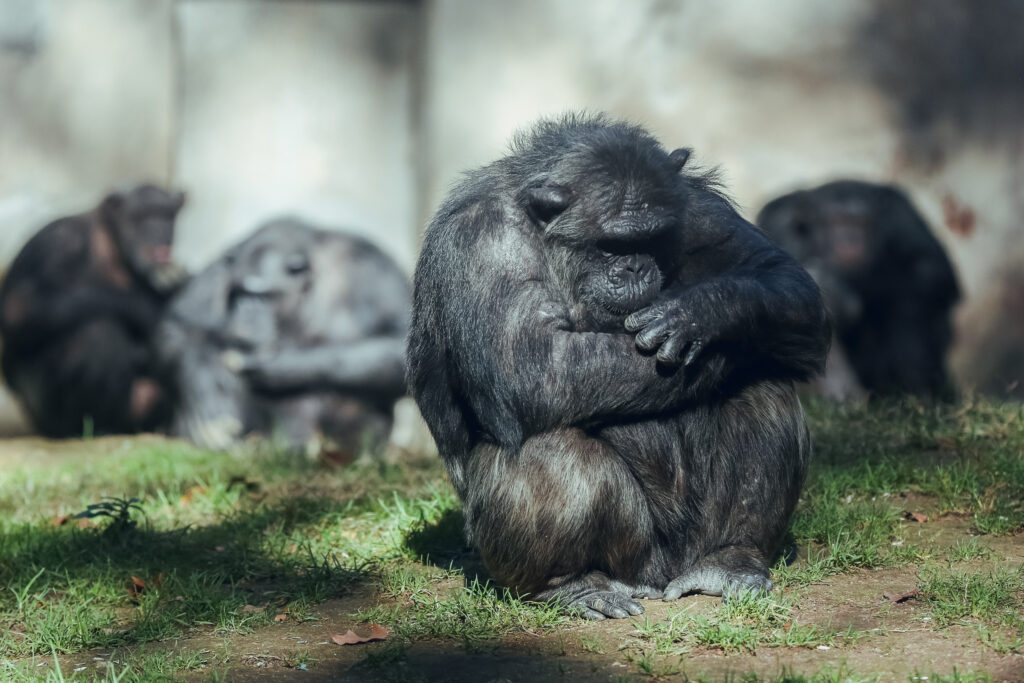
The dominant theory of human warfare focuses on cultural and ideological differences — ethnicity, religion, language — as the primary drivers of conflict. Peace interventions, accordingly, focus on cross-cultural understanding and dialogue.
Sandel’s reading of the chimp data suggests a different model. What preceded the Ngogo civil war wasn’t an ideological divide — it was the erosion of personal relationships that had previously crossed group lines. When the individuals who knew and trusted members of the other cluster died or departed, the groups lost their shared social infrastructure. Conflict followed.
“What we have to do is maintain interpersonal relationships,” Sandel told Scientific American. “In our own daily lives with the people that we interact with, if we can reunite — even in the face of conflict — then I think that’s a recipe for maintaining peace.”
The finding doesn’t make human conflict simple, and the researchers are careful not to overstate the analogy. But the Ngogo data adds a rigorous, 30-year evidential foundation to a hypothesis that has long been intuitive: that war between groups may be less about what people believe and more about whether they know anyone on the other side.