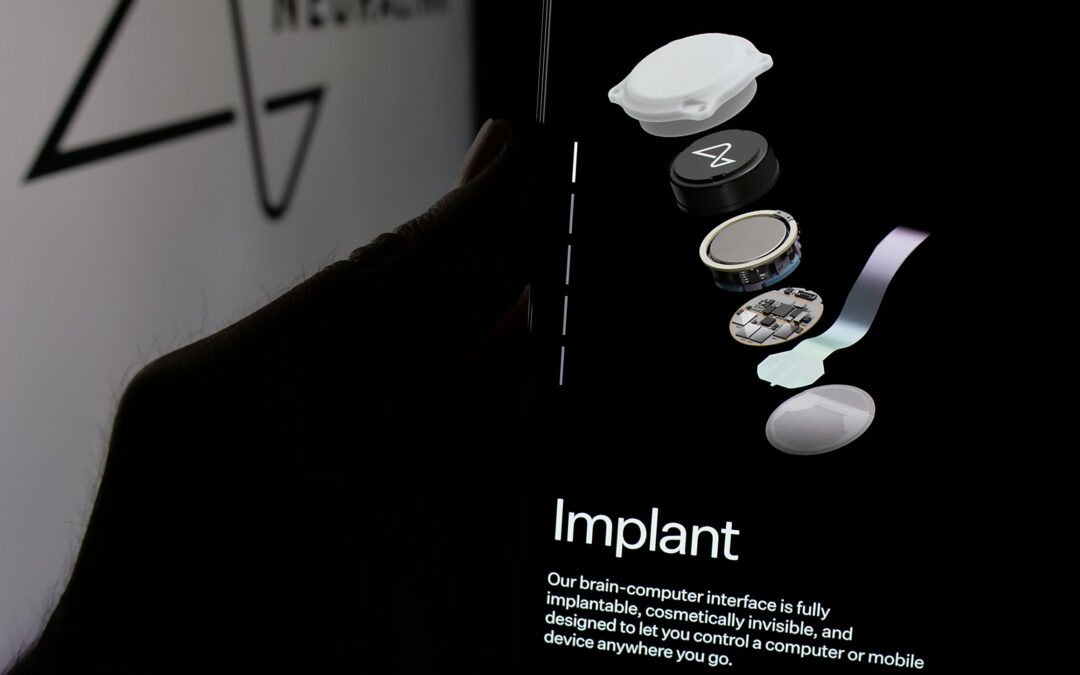
Fewer people have received advanced brain-computer implants than have traveled to space. That’s the context for what’s happening at a handful of university labs and startup clinical trials right now — a rarefied, quietly extraordinary experiment in what technology can restore to a human life. A new in-depth report from IEEE Spectrum spent time with the people actually living with these devices, and the most striking finding isn’t technical. It’s emotional.
What the Headlines Keep Getting Wrong
The coverage around brain-computer interfaces tends to fixate on capability benchmarks: a paralyzed man controls a robotic arm, a woman with ALS speaks again, a quadriplegic surfs the web with his thoughts. These are genuinely remarkable. But ask the people wearing the implants what the technology has actually given them, and the answers are almost never about peak performance metrics.
Austin Beggin, paralyzed in a swimming accident in 2015 and now part of a Case Western Reserve University trial, lists two standout moments with his implant: shaking his parents’ hands for the first time since his injury, and stroking his pet dachshund. Alex Conley, a Neuralink participant who broke his neck in a car accident in 2021, can now open doors and handle a smartphone. What actually moved him was using computer-aided design software to fix his uncle’s power tools and build custom truck bumpers. “I was a very big problem solver before my accident,” he says. “This gives me that same little burst of joy.”
The biggest benefits are consistently more emotional than practical — and the researchers studying these users have begun to take that seriously as a design principle, not a footnote.
30 Minutes to Tears
Casey Harrell was diagnosed with ALS in 2020, the same year his daughter was born. By 2023, he had lost the ability to speak — including the ability to tell his caregivers when he was in pain. After joining a University of California, Davis clinical trial, surgeons implanted electrodes in the brain region that controls speech muscles. The device translates those signals into synthesized voice.
Within 30 minutes of the implant being switched on, Harrell could communicate again. “I was absolutely overwhelmed with the thought of how this would impact my life and allow me to talk to my family and friends and better interact with my daughter,” he told IEEE Spectrum. “I just was so overwhelmed that I began to cry.”
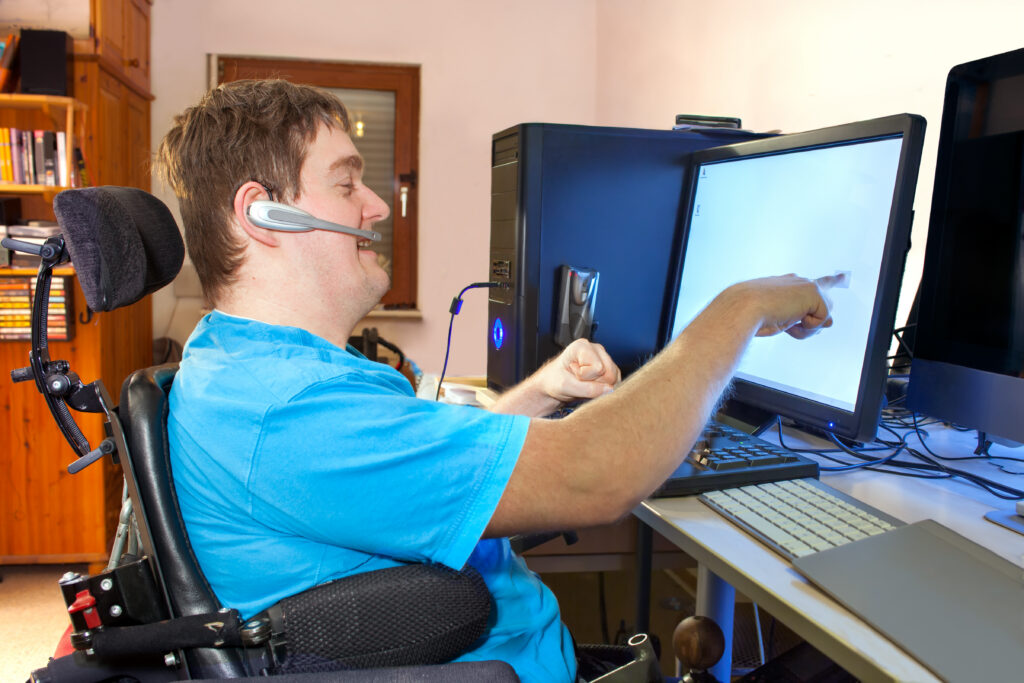
Noland Arbaugh, Neuralink’s first user, was paralyzed from the neck down in a swimming accident and previously required a mouth-controlled joystick for any computer interaction — a process that demanded constant caregiver involvement. Days after his implant was activated in January 2024, he played Civilisation VI for eight hours straight. “It made me feel so independent and so free,” he says. Before the implant, he needed family members to assist him dozens of times a day.
The Gap Between Lab and Life
The technology is not yet what the press releases suggest. Most participants can only use their devices inside lab settings, tethered to wired connections and racks of computer hardware. Neural signals drift gradually over time, meaning decoder software often requires up to an hour of recalibration before each session. For Beggin, this means traveling two hours from his home in Ohio to Cleveland twice a month, working with researchers three to four hours a day — the majority of which involves system calibration rather than actual functional tasks.
There’s also the trial expiration problem. Ian Burkhart — who in 2014 became the first quadriplegic to regain hand movement through a brain implant, enabling him to swipe a credit card, pour from a bottle, and play Guitar Hero — had his implant removed after a trial infection. “It was a little bit of a tease where I got to see the capability of the restoration of function,” he says. “Now I’m just back to where I was.” Burkhart has since founded the BCI Pioneers Coalition, an advocacy group dedicated to ensuring that the people using these devices have direct input into how they’re designed and deployed.
Hype vs. What Users Actually Need
Neuralink’s Elon Musk has suggested the company’s implants could eventually replace smartphones or allow users to save and replay memories. The current trial participants have complicated feelings about that framing. The hype raises funding and visibility, they acknowledge — but it risks redirecting development away from the medical applications that could genuinely transform lives, and raises unresolved questions about data ownership. “Does that data still belong to Neuralink? Does it belong to each person? Can it be sold?” asks Arbaugh.
Scott Imbrie — who in 2020 joined a University of Chicago trial and has since shaken a robotic hand, feeling sensation return through the implant — has a more optimistic read. He argues that consumer ambitions and medical necessity aren’t opposites. Getting BCIs into broader use, he believes, is ultimately what drives the devices to become better for everyone who needs them. “I remember laying there in the bed and not being able to move,” he says. “As humans, we want to be independent.”